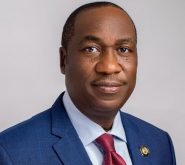
Balendra Shah has taken office as Nepal’s prime minister, capping a rise that has reshaped the country’s political landscape and challenged the dominance of its long-standing elite.

At 35, Shah is among the youngest leaders in Nepal’s history. His path to power has been anything but conventional. Known to millions as Balen, he first built his reputation in the country’s underground rap scene, where his lyrics spoke directly to frustration over corruption, inequality, and a lack of opportunity.

Read also: Rapper Balendra Shah sworn in as Nepal’s prime minister after landslide vote

Born in 1990 in Naradevi, Kathmandu, Shah is the youngest son in his family. His father practised Ayurvedic medicine while his mother raised the household. He studied engineering in Kathmandu and later in the Indian state of Karnataka, a background that would later shape his technocratic approach to governance.

His public profile began to rise in 2013 after he won a widely watched rap battle, delivering sharp and politically charged verses that captured the mood of a disillusioned generation. He went on to release a series of songs that criticised the political class and social injustice, becoming a recognisable figure with his signature black sunglasses and understated style.

Read also: What Nigeria can learn from Nepal crisis

One of his most popular tracks, Balidan, drew attention for its direct criticism of inequality and governance failures, amassing millions of views online. His music did not just entertain. It built a following among young Nepalis who felt unheard.

That support translated into political momentum in 2022, when Shah ran as an independent candidate for mayor of Kathmandu and won by a wide margin, defeating established parties that had dominated for decades. In office, he pushed visible changes, including city clean-up efforts, heritage preservation, and a crackdown on corruption. His decision to demolish illegal structures eased traffic congestion but also drew criticism from informal traders and vulnerable residents.

Read also: Trump extends deadline for striking Iran’s energy plants to April 6

His appeal grew further during the protests that swept Nepal last September. The unrest, triggered by a social media ban but rooted in deeper economic and political grievances, left dozens dead and exposed the depth of public anger. Demonstrators adopted his song Nepal Haseko as an anthem, turning his music into a rallying cry for change.

Rather than follow traditional campaign methods, Shah relied heavily on social media to communicate with voters. He avoided frequent media appearances and instead outlined an agenda focused on tackling corruption, reforming the judiciary, and creating jobs.

That message helped deliver a decisive victory for the Rastriya Swatantra Party in the 5 March general election, the first since the protests. The party secured 182 seats in the 275 member parliament, an outcome that broke the grip of established powers and signalled a demand for a new direction.
Shah’s win also carried symbolic weight. In Jhapa 5, he defeated former prime minister K P Sharma Oli in a constituency long seen as a stronghold of the political old guard.

He was formally appointed prime minister by Ram Chandra Paudel, marking the start of a leadership defined as much by expectation as by disruption.

Supporters see Shah as a figure of renewal, someone who speaks the language of a younger generation and is willing to confront entrenched systems. Critics, however, question whether a relatively new party and a leader with limited national experience can deliver on ambitious promises.

His rise reflects more than personal success. It signals a broader shift in Nepal, where voters appear ready to move beyond familiar poltical actors in search of accountability and results.

Whether Shah can turn that mandate into lasting change now becomes the central test of his leadership.

Faith Omoboye is a foreign affairs correspondent with background in History and International relations. Her work focuses on African politics, diplomacy, and global governance.

Join BusinessDay whatsapp Channel, to stay up to date

Open In Whatsapp