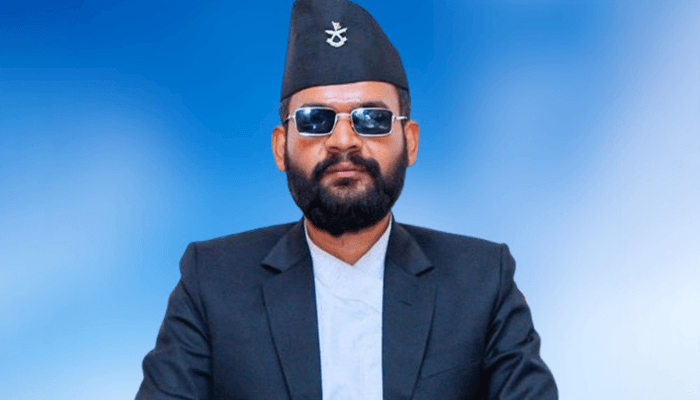
Balendra Shah, the rapper turned politician widely known as Balen, has been sworn in as Nepal’s prime minister following a sweeping election victory that signals a sharp shift in the country’s political direction.

At 35, Shah steps into office as one of the youngest leaders in Nepal’s recent history, propelled by a wave of public frustration with corruption, entrenched elites, and years of political instability. His rise comes less than a year after youth-led protests forced out the previous government, reshaping the political landscape and opening space for new voices.

Read also:What Nigeria can learn from Nepal crisis

Shah’s message of reform and accountability struck a chord, particularly with younger voters. Before taking office on Friday, he released a rap track celebrating what he described as a historic moment for the country, drawing millions of views within hours and reinforcing the unconventional path that brought him to power.

“Undivided Nepali, this time history is being made,” he rapped in a track

His journey from the underground music scene to the highest political office reflects a broader change in public mood. As an artist, Shah built a following by criticising corruption and social inequality, themes that would later define his political campaign.

Read also:nNepal reels from deadly protests as army takes control of the streets

The election result delivered a commanding mandate to the Rastriya Swatantra Party, which secured 182 seats in parliament’s lower house. While just short of a two-thirds majority, it marks the strongest performance by a single party in decades.

Traditional powers were pushed to the margins. The Nepali Congress finished a distant second with 38 seats, while the Communist Party of Nepal UML took 25. Voter turnout stood at about 60 percent of nearly 19 million eligible voters.

Read also:Nepal social media ban protest turns violent, at least 14 killed

The scale of the victory is notable in a system designed to prevent dominance by any one party. Nepal’s mixed electoral model, which combines constituency-based voting with proportional representation, has historically produced coalition governments and fragile alliances.

For many voters, the outcome reflects a clear demand for change. Campaigns focused heavily on unemployment, economic stagnation, and inequality, issues that have disproportionately affected the country’s large youth population.

Yet expectations are high, and questions remain. The Rastriya Swatantra Party is only four years old, and Shah himself has limited political experience beyond his tenure as mayor of Kathmandu. Delivering on promises of reform, while navigating a complex political system, will test both his leadership and the capacity of his party.

For now, his supporters see his victory as a break with the past.

Faith Omoboye is a foreign affairs correspondent with background in History and International relations. Her work focuses on African politics, diplomacy, and global governance.

Join BusinessDay whatsapp Channel, to stay up to date

Open In Whatsapp