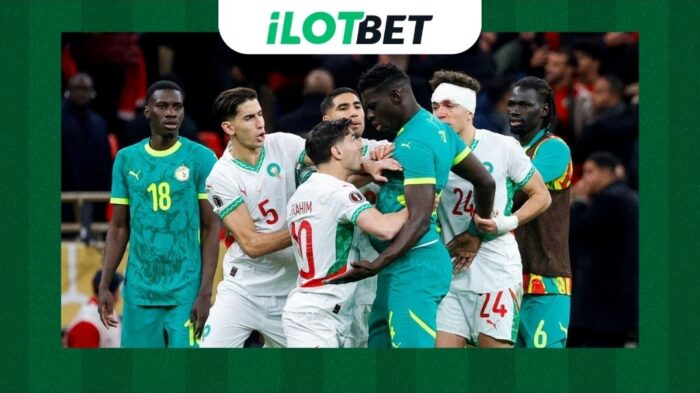
There is something faintly absurd about winning a football match and then having to prove it again in a courtroom. If you didn’t already feel that absurdity, then the events following the latest Africa Cup of Nations final should do the trick. A game is played, a winner emerges, celebrations begin. And then, days later, weeks later, someone in a suit effectively blows a second whistle and tells you none of it counts.
In this case, Senegal national football team did what football teams are supposed to do. They navigated the tension, the tactics, the chaos of a major final and came out the other side with a victory. You can replay the goals, analyse the shape, debate the refereeing decisions. All the usual things. It felt real because it was real. Until it wasn’t.
Because somewhere between the final whistle and the trophy engraver getting to work, the Confederation of African Football decided that what had just happened on the pitch was, in effect, secondary. A walk-off, a protest, a moment of collective dissent. Not pretty, certainly not ideal, but also not unprecedented in football’s long, messy history. And yet this was enough to tilt the entire axis of the result, to hand the title to the Morocco national football team not through goals or tactics, but through regulation.
Of course, you can read this however you like. Some will say rules are rules, that you cannot simply abandon the field of play, even briefly, and expect no consequences. There is logic there. Football without structure is just chaos with grass. Others will look at the timing, the scale of the punishment, and wonder whether the response fits the offence. After all, the match was finished. The contest, in sporting terms, had already been settled.
And this is where it starts to feel less like football and more like something else entirely. Because now the centre of gravity shifts again, this time towards the Court of Arbitration for Sport, where Senegal have taken their case. There will be arguments, documents, interpretations. Somewhere, someone will attempt to translate 120 minutes of football into paragraphs and clauses. It is all very necessary, all very proper. And yet it also feels faintly detached from the thing it is trying to adjudicate.
Football has always had rules, but it has rarely allowed those rules to so completely override what everyone has already seen with their own eyes. That is the tension here. Not whether Senegal were right or wrong to walk off, but whether a completed final should ever be unpicked in this way. Whether the authority of the whistle should extend beyond the pitch and into legal chambers weeks later.
Because if it does, then where exactly does it stop? If a final can be reversed, then no result is ever truly safe. Every match becomes provisional, every celebration subject to appeal. The spontaneity that makes football what it is begins to erode, replaced by something slower, colder, more procedural. You don’t just win anymore. You wait to be confirmed as having won.
And yet, there is no easy answer. Strip away governance and you invite disorder. Enforce it too rigidly and you risk draining the life out of the game. The balance has always been delicate. Perhaps it has never been tested quite like this.
For now, the strange reality is that two truths are coexisting. Senegal won a football match. Morocco hold the title. And somewhere in between, the sport itself is being asked to decide what matters more: the action on the pitch, or the interpretation that follows it.
Place your bets with iLOTBET today for a chance to become one of the lucky winners of an iPhone 17.
Join BusinessDay whatsapp Channel, to stay up to date
Open In Whatsapp