Tomorrow, March 28, 2026, guests in many environment-friendly hotels in Nigeria will enjoy an hour of ‘fanciful darkness’.

From 8:30 pm – 9:30 pm, they will join millions of guests in hotels across the world to observe the 2026 Earth Hour, an observance of one hour of putting off all lights in hotels and thereby illuminating a powerful message about environmental awareness and action.

The Earth Hour was created by the World Wildlife Fund (WWF) in 2007, to emphasize the threat of global warming and the need to reduce carbon emissions. Since then, the event has become an annual ritual in the hospitality industry across the globe.

Now in its 20th edition, this year’s event holds on the theme, “Give an hour for Earth”, which requires people to do something positive for the planet, such as spending time outdoors or switching off lights in support of the two decades of the global movement aiming to combat biodiversity loss and climate change.

The theme also emphasizes turning the symbolic one-hour light switch-off into a broader movement for the future.

Hotel guests and other participants are asked to do more than just turning off the lights, they are urged to spend 60 minutes doing something positive for the planet such as eco-reading, sustainable cooking or reconnecting with nature, tree planting, among others active and positive actions for nature and climate.

This Saturday’s Earth Hour observance is also in line with the race against the 2030 deadline for reversing the global biodiversity loss.

But the interesting thing about the observance, especially by hotel guests, is that it is not mandatory, hence a sacrifice on the part of the guests, most of whom are willing to observe the hour.

While the guests have the right to differ, their partaking in the one-hour light off is usually gains to hotels as an estimated over $5 million worth of energy is saved within the one hour across hotels in the world that observe it.

Jeffery Nkuli, a South African hotelier, noted that the observance is encouraged at a higher level across the hospitality industry within the Southern African region because of the impact.

“One hour may seem small, but the observance enables hotels to reduce carbon emission, save money from the electricity that would have been consumed within the light-off hour and also strengthen bonds between the two,” Nkuli said.

Though electricity supply has improved a great deal in Nigeria, many hotels earnestly wish the one-hour observance could extend to two hours or more because of the supply issue, high cost of diesel and maintenance.

However, many Nigerian hotels, especially international brands and their guests, will be observing the Earth Hour tomorrow. From Hilton properties; Transcorp Hilton Abuja and Legend Hotel Lagos Airport, to all the Radisson Hotel Group properties; Radisson Blu Anchorage, Radisson Blu Hotel Ikeja, Radisson Ikeja, Park Inn by Radisson and to Marriott, and Accor’s Movenpick in Ikoyi, the light will be off for one hour.

For the one hour, the exterior signage lightings of most the participating hotels would be turned off; non-essential interior lightings dimed, while candlelight would be used in appropriate public areas such as restaurants and bars; and in-room voicemail messages and in-room television messages to inform guests about Earth Hour observance.

For Transcorp Hilton Abuja, marking the Earth Hour is part of its sustainability goals, as the Abuja-based five-star hotel is encouraging the guests and the public to participate in one way or another to save the planet.

The Radisson Hotel Group is also urging the guests to join hands with its Nigerian properties and management to make a difference, insisting that all should work together to fight against climate change.

Apart from the observance of the one-hour light-off, there are also exciting activities across some participating hotels in Nigeria to further the bond among participating guests and families at the hotels as well as hotel staff members.

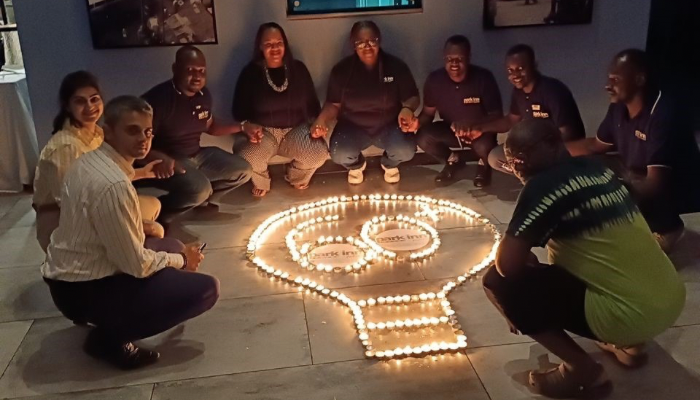
In Lagos, some guests will join hotel staff in using candles to create the shape of an electric bulb and lighting up the hotel without electricity, there will be tree planting exercises in Abuja, hosting of some conservation and eco-friendly projects, among others.

Some Lagos hotels will be offering willing guests an opportunity to create their menu, particularly barbeque and drink cocktails just for the fun of it.

Created by the WWF, Earth Hour began in 2007 as a way for individuals and businesses to show how simple steps can make a significant impact on addressing climate change. The idea was conceived during a WWF meeting held at the Hilton Sydney, Australia. In its first year, more than two million people turned off their lights for an hour and reduced the city’s energy consumption by more than 10 percent. It became a global movement in 2008 with more than 50 million people participating, and today it is the largest grassroots environmental movement in the world with almost 10,000 cities and towns in 180 countries and territories and hundreds of millions of people participating across seven continents.

Join BusinessDay whatsapp Channel, to stay up to date

Open In Whatsapp