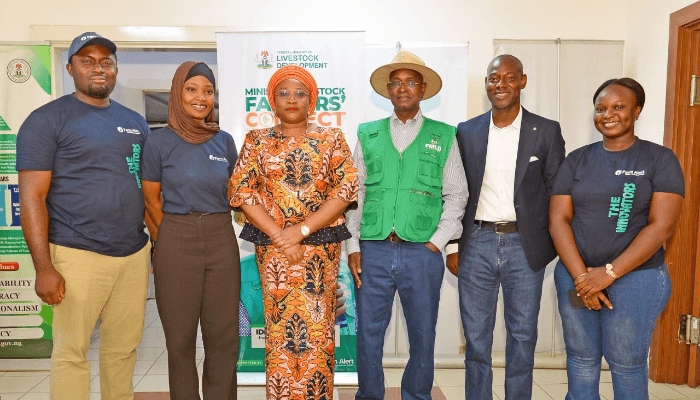
Nigeria is positioning its livestock sector for significant private capital inflow as the Federal Government moves to dismantle entrenched middlemen structures blamed for price distortions and weak value chain returns.
Speaking at the Minister–Livestock Farmers’ Connect in Abuja, Idi Mukhtar Maiha, minister of livestock development, said current market inefficiencies allow intermediaries to capture disproportionate value, leaving producers underpaid while inflating consumer prices.
The reform push signals a strategic shift towards integrated livestock business models, where producers transact directly with processors, abattoirs, and bulk buyers. Analysts say this could unlock higher margins for primary producers and improve supply chain transparency—two key factors for attracting institutional investors.
Read also: NiMet, L-PRES partner on weather data for livestock productivity
Maiha said the government will introduce a live-weight pricing system, aligning Nigeria with global livestock trading standards. The move is expected to standardise pricing, reduce arbitrage, and create a more predictable revenue framework for investors and commercial ranch operators.
The reforms come as the government identifies high-growth verticals across the livestock economy, including pasture seed production, commercial fodder supply, dairy aggregation, leather processing, and animal by-products.
These segments, currently underdeveloped, are being positioned as entry points for private equity, agribusiness firms, and youth-led enterprises.
Particularly, the fodder market is emerging as a strong export play, with growing demand from Gulf markets, while the leather value chain alone is projected to support up to 700,000 jobs, underscoring its industrial scale potential.
To de-risk investments, the government is pushing for structured off-take agreements and improved access to finance through institutions such as the Bank of Agriculture, NIRSAL-backed facilities, and the Development Bank of Nigeria, alongside World Bank-supported intervention programmes.
In parallel, Nigeria is accelerating its transition from open grazing to commercial ranching systems, a move seen as critical to improving productivity, reducing conflict-related losses, and enabling scalable livestock operations.
Digital infrastructure is also being deployed as a core enabler of sector transformation. The planned rollout of a Livestock Public Digital Infrastructure platform is expected to function as a marketplace and data hub, allowing investors to identify opportunities, access sector intelligence, and connect directly with value chain players.
Additionally, the government will introduce digital livestock tagging and traceability systems to tackle cattle rustling and improve asset security—an essential requirement for insurance penetration and formal financing.
Read also: Million-naira goats reshape Kano’s livestock economy
Industry observers note that if effectively implemented, the reforms could transition Nigeria’s livestock sector from a largely informal system into a structured, investment-ready agribusiness market, capable of supporting both domestic food security and export-led growth.
Chinyere Ijeoma Akujobi, permanent secretary, ministry of livestock development, said the initiative reflects a broader push for policy transparency and stakeholder-driven reforms, aimed at building a more competitive and resilient livestock economy.
The Minister–Livestock Farmers’ Connect, organised with Farm Alert and the L-PRES Project, is expected to serve as a recurring interface between policymakers and investors as Nigeria seeks to unlock the full commercial value of its livestock sector.

Join BusinessDay whatsapp Channel, to stay up to date
Open In Whatsapp