1. Nigeria’s LNG Opportunity Amid the Iran-Israel-USA Conflict
A recent post on X captures a pressing geopolitical reality:
“When Scholz came to Nigeria in 2023 seeking LNG to replace Russian gas, Europe handed us a golden ticket to become a strategic supplier. We squandered it. The current Iran conflict has blown the window wide open again, disrupting Qatar’s output, spiking prices, and forcing Europe to scramble for reliable alternatives.
Nigeria, with Africa’s largest gas reserves and established export terminals, has a second chance to seize this moment. But opportunities like this vanish fast if we repeat the same mistakes. Time to act decisively, or we watch as other new major players claim the prize.”
Background:
In October 2023, German Chancellor Olaf Scholz visited Nigeria specifically to explore LNG supply partnerships. At that time, Europe was urgently seeking alternatives to Russian gas following the Ukraine invasion. Nigeria, equipped with Africa’s largest natural gas reserves (exceeding 200 trillion cubic feet) and established export infrastructure such as the Nigeria LNG (NLNG) facility on Bonny Island, was ideally positioned to become a strategic partner.
Yet, that opportunity was largely missed. Progress on expansions, such as NLNG Train 7, slowed due to bureaucratic hurdles, investment delays, and competing domestic priorities. Europe instead turned to the United States, Australia, and other suppliers.
The New Crisis:
Fast-forward to early 2026. The escalating Iran-Israel-USA conflict has dramatically reshaped the global energy market. Key developments include:
• Attacks on Qatari Infrastructure: Iranian drone and missile strikes targeted QatarEnergy’s Ras Laffan Industrial City, the world’s largest LNG export hub, responsible for roughly 20% of global supply.
• Production Halted: QatarEnergy declared force majeure and halted production, reporting extensive damage.
• Strait of Hormuz Disruption: The vital shipping lane for Qatari LNG is now a conflict zone, with recovery timelines expected to stretch for weeks or months.
The result has been a sharp rise in European gas prices (benchmarks like the Dutch TTF have increased by 35–50%) and a frantic rush for alternative supplies, with Europe competing fiercely against Asian buyers amid low storage levels.
A Second Chance for Nigeria:
Nigeria now faces a critical, urgent opportunity.
With existing terminals, shorter shipping routes to Europe than many competitors, and the capacity to increase output through projects like Train 7 (aimed at reaching approximately 30 million tonnes per annum), the country can secure long-term contracts, generate substantial revenue, create jobs, and strengthen its role in the global energy transition.
However, this window will close quickly.
Competitors—including US LNG exporters, Australia, and emerging African producers—are moving swiftly. Nigeria risks repeating past mistakes if it fails to implement reforms, streamline investment approvals, and create a better investment climate. Acting decisively now—by accelerating NLNG expansions, fast-tracking partnerships, and actively marketing to European buyers—is not just an economic necessity but a strategic key to redefining Nigeria’s global position. Delay could mean losing billions in potential revenue.
2. Senegal Players Mock CAF After AFCON Title Awarded to Morocco—Two Months Later
Here is how one medium described it. Imagine winning a gruelling football final in the rain, lifting the trophy, and then receiving an email that reads, “Actually, the trophy is not yours…”
This is the surreal reality for the Senegalese national team after the Confederation of African Football (CAF) decided to strip them of their Africa Cup of Nations title and award it to Morocco. Senegal had won the final in Rabat with an extra-time goal, but not before a dramatic walk-off following a penalty awarded against them. When Senegal returned to the pitch, the referee allowed play to continue.
Morocco missed the last-minute penalty, and Senegal went on to score the winner in extra time.
Now, CAF’s Appeal Board has ruled that by walking off, Senegal contravened tournament regulations and effectively forfeited the match, handing Morocco a 3-0 victory.
The decision has been met with widespread incredulity:
• Raymond Hack, CAF’s former head of disciplinary, called the situation a “circus” and pointed to a glaring conflict of interest: the president of the Moroccan FA is also the Vice-President of CAF.
• Critics across Africa have labelled the move “amateurish,” noting CAF’s history of controversial rulings that are often overturned by the Court of Arbitration for Sport (CAS).
Senegal’s Squad: Masters of the Sub-Tweet
Instead of issuing formal statements, Senegalese players have taken to social media to deliver world-class shade:
• Pathe Ciss posted a photo with the trophy, sarcastically suggesting CAF give the “cry babies” three more goals while they’re at it.
• Mamadou Lamine Camara jokingly asked when the Moroccan victory parade was scheduled so he’d know when to drop off his medal.
• El Hadji Malick Diouf summed it up perfectly: “This trophy is won on the pitch, not by email.”
The case is now headed to CAS, but a final ruling could take up to six months. In the meantime, Senegal is holding onto its medals, and Morocco is presumably awaiting delivery of its new trophy.
3. Dividends of President Bola Tinubu’s UK State Visit
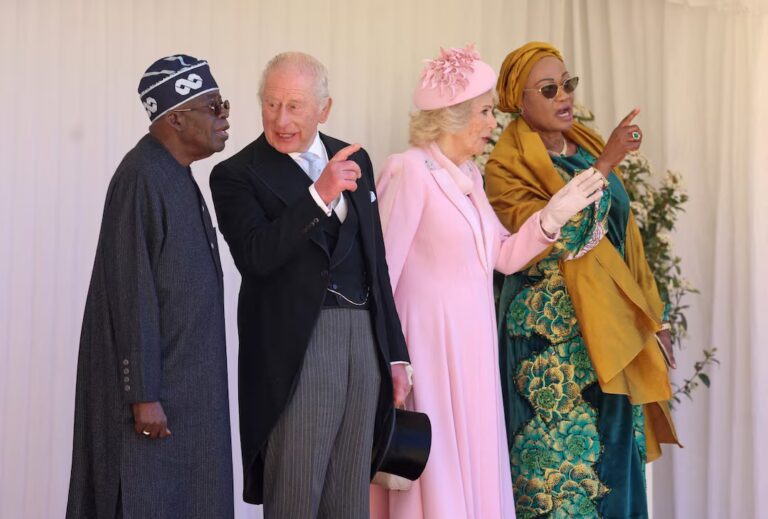
President Bola Ahmed Tinubu’s two-day state visit to the United Kingdom—the first by a Nigerian leader in 37 years—produced a mix of substantial economic agreements, high-level diplomatic recognition, and lingering questions about tangible benefits for ordinary Nigerians.
Economic and Investment Dividends:
The visit’s most significant outcomes were economic, with the Nigerian government securing over $1.51 billion in total investment commitments.
• Flagship Port Modernisation Deal (£746 million): A financing agreement with UK Export Finance (UKEF) to upgrade the Lagos Port Complex (Apapa) and Tin Can Island Port. The project aims to reduce chronic congestion and vessel turnaround times at ports that handle about 70% of Nigeria’s imports and exports.
• Boost for UK and Nigerian Jobs: The deal mandates that at least 20% of contracts (£236 million) be sourced from British firms, including a record £70 million contract for British Steel.
For Nigeria, the project is expected to create jobs during construction and enhance long-term efficiency in the maritime sector.
• Agricultural and Manufacturing Investments:
o $496 Million Dairy Platform: The Nigeria Sovereign Investment Authority (NSIA) signed an MoU with UK-based Asset Green Ltd to establish a large-scale integrated dairy facility, aiming to reduce Nigeria’s reliance on dairy imports.
o Twinning’s Ovaltine Manufacturing Facility: A £24 million ($32 million) commitment to build the company’s first major African manufacturing plant in Lagos, expected to create over 100 direct jobs and boost regional exports.
Diplomatic and Cultural Dividends:
The visit was rich in symbolism aimed at elevating Nigeria’s global standing.
• A “Historic” Milestone: UK Prime Minister Sir Keir Starmer described the visit as “historic,” marked by a state banquet hosted by King Charles III at Windsor Castle—the highest diplomatic honour the UK can bestow. Notably, special arrangements were made for President Tinubu to observe Ramadan fasts, including a prayer room at Windsor Castle.
• Strengthened Strategic Partnership: Leaders reaffirmed the UK-Nigeria Strategic Partnership and signed a new Memorandum of Understanding (MoU) to formalise a framework for continued trade and investment cooperation.
Critical Perspectives: Are the Dividends Unequal? Despite the headline deals, critics have raised concerns about the true nature of the dividends.
• A Question of Balance: Ambassador John Usanga, a former Nigerian diplomat, noted the agreements might benefit the UK more than Nigeria. While the port deal enhances infrastructure, it remains uncertain how much it translates into Nigerian jobs or foreign exchange gains, especially with the guaranteed £236 million for British firms. The BBC also noted the trade balance currently favours the UK.
• Structural Challenges at Home: A deeper analysis indicates that the investments do not tackle fundamental structural issues. The Blueprint newspaper argued the dividends are “uneven” because Nigeria’s economy remains hindered by poor electricity supply (with about 85 million Nigerians off the grid), insecurity, and a heavy reliance on hydrocarbon exports.
• The Security Dimension: While security cooperation was discussed, no major new announcements emerged to address ongoing conflicts, including the jihadist insurgency in the northeast and widespread kidnappings. UK contributions have so far been limited to training and technical assistance.
4. Did the Federal Government Give the City Boy Movement N30 Billion?
No. There is no official record that the Federal Government allocated N30 billion to the City Boy Movement.
The claim appears to have originated from viral social media allegations by businessman Chidi Mike around 17 March 2026. He alleged that Seyi Tinubu provided N30 billion to the movement’s South-East chapter to organise an event in Owerri, and that the funds were subsequently misappropriated.
The reports lack official verification and may conflate the N30 billion figure with other recent news:
• State Allocations: In early 2024, Senate President Godswill Akpabio claimed the FG gave each state N30 billion for food security—a claim several governors publicly denied.
• Oyo State Support: Following the Bodija explosion, the FG reportedly released N30 billion (out of a promised N50 billion) to the Oyo State Government.
• National Flag Designer: In January 2025, the FG donated N30 million (not billion) to the family of Taiwo Akinkunmi, the designer of Nigeria’s national flag.
The City Boy Movement is a youth-led political advocacy group supporting President Tinubu’s “Renewed Hope” agenda. While it organises empowerment tours, there is no verified government disbursement of N30 billion to the group.
5. What Could N30 Billion Achieve for the South-East Economy?
Even after the clarification, the sum intrigued this correspondent and BusinessDay as an economic publication. What could the South-East do with N30 billion? We asked AI platforms.
N30 billion (approximately $19 million USD) is a substantial sum, but in terms of regional development, it acts more as a catalyst than enough to build a seaport. Nonetheless, it can induce a transformative multiplier effect if utilised strategically.
For the South-East economy—characterised by high entrepreneurial density, the Nnewi manufacturing cluster, massive diaspora remittances, and a deficit in hard infrastructure—here is what N30 billion could achieve
1. The “Light-Up” Industrialisation Strategy (Energy)
The main constraint on the South-East economy is power. SMEs in textiles, plastics, steel fabrication, and pharmaceuticals rely on expensive diesel generators.
o What N30bn can do: Fund a Distributed Renewable Energy (DRE) Aggregation Program to provide 20 MW of solar hybrid mini grids to five major industrial clusters (e.g., Nnewi auto parts, Aba leather/footwear).
o Outcome: Reduce production costs by 30–40%, making local goods competitive with imports and securing over 50,000 existing jobs.
2. The Nnewi-Aba Manufacturing Corridor (Infrastructure)
The South-East is Nigeria’s industrial backbone, but roads linking key centres such as Enugu, Port Harcourt, and Aba-Owerri-Nnewi are notorious for high logistics costs.
o What N30bn can achieve: A targeted “last mile” logistics intervention to reconstruct 20–30 km of feeder roads connecting industrial warehouses to main expressways.
o Outcome: Reduce truck turnaround time by 70%, minimise food spoilage, and cut production costs throughout the value chain.
3. Enyimba Economic City (Anchor Investment)
The proposed special economic zone (SEZ) in Abia State aims to replicate the Lekki Free Zone but often stalls due to high pre-development infrastructure costs.
o What N30bn can do: Serve as state government counterpart funding to de-risk the project, attracting an additional N150–200 billion in private sector loans and FDI.
o Outcome: Establish a new manufacturing centre capable of hosting over 50 factories, shifting the region from trading to high-value manufacturing.
4. Agricultural Processing Zones (Ebonyi & Enugu)
The South-East exports raw commodities (rice, cashew, palm produce) but imports processed food.
o What N30bn can achieve: Establish three large-scale Agricultural Processing Centres (APCs) under the Special Agro-Industrial Processing Zones (SAPZ) framework.
o Outcome: Double the income of 50,000 rural farmers by enabling them to sell processed, high-value products to major companies, retaining revenue currently benefiting Thailand and Vietnam.
5. The South-East Innovation & Tech Hub
The region has a high density of tech talent but suffers from a “Japa” (emigration) syndrome due to a lack of local venture capital and enabling infrastructure.
o What N30bn can do: Create a Regional Tech Endowment Fund—a venture capital fund for startups in logistics, education, and health.
o Outcome: Retain talent in cities like Enugu and Owerri, creating a new tax base and a service-export economy.
Summary: If N30 billion is simply divided, it will vanish. If strategically utilised, it could increase the Internally Generated Revenue (IGR) of the five states by 15–20% annually within 24 months.
6. Burna Boy to Rebuild Community School, Seeks Gov Fubara’s Help with Access Roads
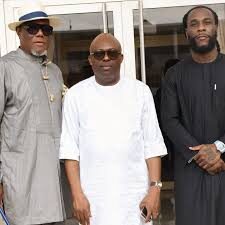
Grammy-winning artist Burna Boy has visited Rivers State Governor Sim Fubara to seek government assistance in constructing access roads to his community, Ogbogolo. The singer plans to spend an estimated ₦500 million on rebuilding a school there, but the project faces a major challenge: the community does not have proper road access.
Social media influencer VeryDarkMan (VDM), who is collaborating on the project, explained that transporting construction materials is impossible without proper roads. Burna Boy himself experienced the difficulty firsthand when his vehicle got stuck in the mud during a visit, prompting him to seek the governor’s intervention. The state government’s assistance in constructing the access road is now seen as crucial to completing the privately funded school project.

Join BusinessDay whatsapp Channel, to stay up to date
Open In Whatsapp