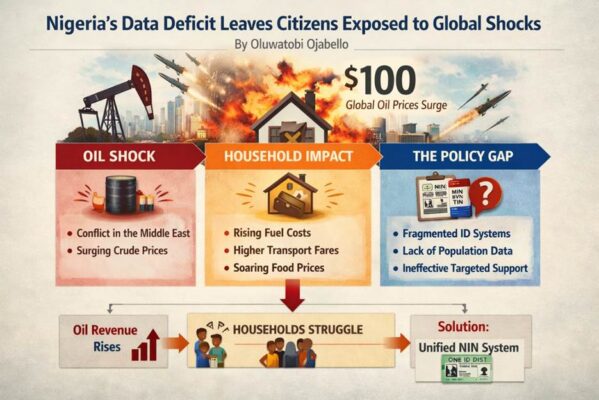
When global oil prices rise due to conflicts thousands of miles away, oil-producing countries are expected to benefit. In Nigeria, the net effect is often negative for households. Higher crude prices feed quickly into rising fuel costs, transport fares, and food prices, eroding purchasing power despite the country’s oil wealth. The problem is structural. Nigeria lacks the data systems required to identify and protect citizens most exposed to these shocks.
Recent tensions in the Middle East involving the United States, Israel, and Iran have p