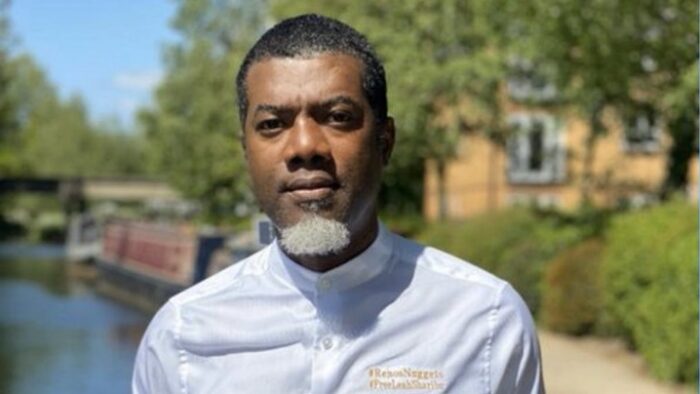
Late last year, the misadventure of Reno Omokri in his botched attempt to disannul the claim of Christian genocide in Nigeria played out like a tragic comedy taken too far.
The American he brought into the fray, Mike Arnold, ended up doing the exact opposite of what was expected. Instead of lending credibility to Omokri’s position, Arnold publicly dismantled him, leaving indelible marks on an already bruised reputation. At one point, the American clergy went as far as describing him as a pathological liar.
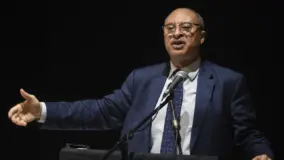
Before the echoes of that episode could fade, another foreigner — this time a seasoned international broadcaster, Mehdi Hassan of Al Jazeera — descended heavily on another barrister and presidential spokesperson, Dr. Daniel Bwala.
To be fair, Bwala is widely regarded as one of the most articulate political spokespersons in the country today. On the local media circuit, he often dominates the conversation. His eloquence and intellectual confidence make him a formidable presence.
But Nigeria’s media ecosystem sometimes creates conditions that flatter political spokespersons. Many media houses are frequently accused of patronage, while journalists are routinely alleged to survive on the notorious brown envelope. In such an environment, some media encounters gradually degenerate into little more than charades — jankara markets of rehearsed questions and predictable answers.
Mehdi Hassan, however, does not operate that way.
Characteristically combative and forensic, he subjected Bwala to a relentless interrogation that left many viewers stunned. Whether it was personal hostility, ideological disagreement with the administration Bwala represents, or simply the professional instinct of a journalist unwilling to take prisoners, the interview landed like a thunderbolt. The country is still discussing that encounter.
Quite incredibly, some have even suggested that Bwala should resign his position — a rather curious demand for what was essentially a bruising media exchange.
Yet, beyond the spectacle lies a deeper national conversation about the recruitment, preparation, and expectations of political spokespersons.
Several commentators have argued that the selection of spokespersons must be far more deliberate and strategic, given the sensitivity of the role. One sarcastic proposal making the rounds is that before anyone assumes the office of spokesperson, they should first be sent to Mehdi Hassan for an interview. If they survive the encounter, they are declared fit for purpose. If they collapse under questioning, they are certified irredeemably unfit for the job.
Behind the humour lies a troubling reality.
The role of political spokesperson in Nigeria is increasingly degenerating into something resembling motor park touting — the “agberolisation” of political communication — where aggression often substitutes for intellect and noise replaces persuasion.
Time and again, dignified professionals with impressive careers enter political communication only to emerge diminished, their reputations shredded in the crossfire of partisan warfare.
In the debate over who makes the best spokesperson, one public relations expert recently dismissed lawyers entirely. His argument was that the natural recruitment reservoir should be trained communication professionals — individuals grounded in reputation management, strategic messaging, and public accountability.
Others take a different view. They argue that seasoned journalists with established credibility often perform better in such roles. Names like Reuben Abati, Segun Adeniyi, Femi Adesina, and more recently Bayo Onanuga are frequently cited as examples, but the outcomes of their sojourning are in the public courts for evaluations
Then come the lawyers whose instinctive professional reflex is adversarial. In court, their duty is to defend the client at all costs. But when that reflex migrates into political communication, it sometimes produces a spokesperson permanently shouting “not guilty” even when overwhelming evidence is staring everyone in the face.
If that observation sounds unfair, one might simply ask how courtroom reflexes perform in front of an interviewer like Mehdi Hassan.
Ultimately, however, the effectiveness of a spokesperson has little to do with professional background. What truly matters is the measure of professionalism, restraint, and intellectual honesty brought to the role.
Anyone can spin like an overzealous PR consultant. Anyone can manipulate media relationships like a compromised journalist. Any brilliant lawyer can shout objections and deny uncomfortable facts.
But the real task of a spokesperson is far more delicate: to represent the position of their principal with clarity and conviction while remaining within the boundaries of reason and maintaining an enduring obligation to the intelligence of the public.
Political falsehoods may survive a tenure — four years, perhaps eight. But reputations constructed on those falsehoods tend to outlive the offices that produced them.
Former Information Minister Lai Mohammed once recounted how even his grandchild asked him why people constantly called him a liar. It was a moment of unintended honesty that revealed how deeply public narratives can stain personal legacy.
Which raises a fundamental question: who decreed that a spokesperson must be rude, uncultured, brash, antagonistic, and pathologically committed to denying reality?
Sadly, in Nigeria today, the profession is drifting dangerously close to notoriety.
The unwritten code appears simple: if necessary, say the devil is Christ — so long as the election is won, the candidate is defended, and the party looks good.
But history is rarely kind to professional defenders of the indefensible.
Even the most skilled spokespersons are not immune to scrutiny. Nigeria’s Foreign Affairs Minister, grilled on Piers Morgan Uncensored over contested figures on religious violence, showed how quickly the office can become a minefield. Conveying a government’s position with accuracy, authority, and credibility is a daily negotiation with risk — one misstep, one poorly chosen word, and professional reputation can unravel in real time. The role is unforgiving, and its sins, once committed, are not easily pardoned.
Long after the microphones are switched off and the political masters have moved on, the spokesperson is often left alone with the only verdict that truly matters — the judgment of memory.

Join BusinessDay whatsapp Channel, to stay up to date
Open In Whatsapp