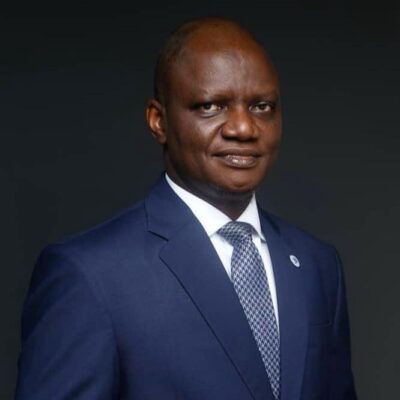
Isiaka Lawal is the managing director of Lotus Bank, a non-interest financial institution in Nigeria focused on providing ethical and participatory banking solutions.
Since taking the helm, Lawal has overseen the expansion of Lotus Bank’s product offerings, including Sukuk and other participatory instruments, while championing financial inclusion and ethical finance across the country.
In this interview with BusinessDay, Lawal speaks on how Nigeria’s evolving tax reforms, fiscal policies, and structural financing options could help reduce the government’s reliance on debt, strengthen investor confidence, and deepen the country’s capital markets.
Read also: Nigeria’s economic revival possible with right leadership – Gbenga Hashim
Do you believe non-interest banking can help reduce Nigeria’s reliance on debt?
Nigeria cannot sustainably finance its fiscal deficit through interest-bearing borrowing alone, particularly when debt service already absorbs a large share of government revenue.
Non-interest finance offers a credible complement because its instruments are tied to real assets rather than pure debt obligations.
Nigeria’s sovereign Sukuk programme already demonstrates this potential. The issuances have been consistently oversubscribed and have financed critical road infrastructure across the country.
Expanding Sukuk and other participatory structures can diversify government funding sources while mobilising domestic savings for long-term development. Over time, this reduces reliance on expensive borrowing and helps deepen Nigeria’s capital markets.
“Non-interest finance offers a credible complement because its instruments are tied to real assets rather than pure debt obligations.”
How does tax policy affect demand for non-interest financial products during weak consumer spending?
Tax policy inevitably affects household purchasing power. When disposable income tightens, investors often become more selective about where they place their savings.
Ethical finance tends to remain resilient in such periods because it is built around transparency, asset backing, and risk sharing. Instruments such as Sukuk or profit-sharing investments are often perceived as more stable and aligned with real economic activity.
Globally, we have seen this resilience in markets like Malaysia and the Gulf, where Islamic financial instruments continue attracting capital even during periods of fiscal tightening.
Nigeria is beginning to see similar interest as more customers look for transparent and value-aligned financial products.
Are Nigeria’s tax reforms strong enough to attract ethical finance investors?
Tax reforms are an important signal to investors because they reflect fiscal discipline and governance standards. Nigeria’s current efforts to improve tax administration and expand the revenue base are positive steps.
However, investor confidence ultimately depends on consistency. Foreign ethical finance investors look for predictable policies, transparent governance, and long-term policy continuity.
If Nigeria sustains these reforms and demonstrates consistent implementation, it will strengthen investor confidence and attract more long-term capital into the economy, including from ethical finance investors.
“Investor confidence ultimately depends on predictable policies and long-term policy continuity.”
Are tax rules still disadvantageous to Islamic finance in Nigeria?
Islamic finance still faces structural tax challenges in Nigeria. Many Islamic financial transactions involve asset transfers or profit-sharing structures, yet the tax system often treats them like conventional loans.
This can create unintended consequences, such as multiple taxation points within a single transaction.
In more mature Islamic finance markets, governments have introduced tax neutrality provisions to ensure Islamic products are not disadvantaged.
Introducing similar reforms in Nigeria would help level the playing field and accelerate the growth of the non-interest banking sector.
Could expanding the tax net slow financial inclusion for SMEs?
Expanding the tax base is necessary for fiscal sustainability, but it must be done carefully to avoid discouraging small businesses from entering the formal economy.
For SMEs and informal sector operators, simplicity is key. Compliance processes must be easy to understand and affordable to implement.
A balanced approach would combine simplified tax regimes, digital tax administration, and incentives for formalisation, such as access to finance and government programmes.
When tax policy supports enterprise growth, revenue mobilisation and financial inclusion can progress together.
How does Nigeria’s tax and regulatory environment compare with Côte d’Ivoire?
Nigeria and Côte d’Ivoire offer different investment environments.
Nigeria’s main advantage is scale. It has one of Africa’s largest markets and a highly dynamic private sector.
Côte d’Ivoire benefits from regulatory predictability and the stability of the CFA franc under the OHADA framework, which simplifies legal processes for investors.
Nigeria’s opportunity lies in combining its large market with stronger policy consistency and regulatory clarity. Doing so would significantly improve the country’s attractiveness to both domestic and international investors.
Do windfall taxes create policy uncertainty for investors?
Windfall taxes often raise concerns about policy predictability. Investors typically prefer stable and clearly communicated tax frameworks when making long-term capital allocation decisions.
When tax measures appear sudden or retroactive, they can create uncertainty about future policy direction.
Governments sometimes adopt such measures during extraordinary economic circumstances, but maintaining transparency and consistency in fiscal policy is essential to sustaining investor confidence in the financial system.
Which tax reform would you prioritise to grow revenue sustainably?
Nigeria’s challenge is less about tax rates and more about efficiency and compliance.
The tax base remains narrow, and administration can still be complex.
A priority reform should therefore focus on improving tax administration through digital platforms, simplifying compliance for SMEs, and eliminating multiple taxation across different levels of government.
A predictable and efficient tax system encourages voluntary compliance, supports business growth, and ultimately generates more sustainable government revenue.

Join BusinessDay whatsapp Channel, to stay up to date
Open In Whatsapp