Nigeria’s plastic recycling sector represents an estimated $10 billion market, highlighting the scale of opportunity within the country’s broader waste-to-value economy, according to the Green Cities Infrastructure and Energy Programme (GCIEP).

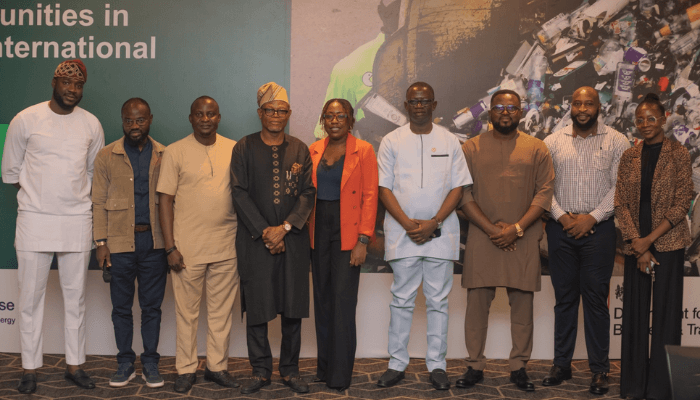
This opportunity was the focus of stakeholders from across Lagos’ waste- to-value ecosystem gathered to discuss the sector’s opportunities and the practical steps needed to unlock them through stronger collaboration.

The waste-to-value study was commissioned by the UK Department for Business and Trade and delivered under GCIEP. It involved extensive engagement with stakeholders in Nigeria and the UK to assess key market opportunities, gauge international investor interest, and identify the main barriers to investment in the sector.

Oluwatosin Adenuga, Energy and Technology Trade Adviser at the UK Department for Business and Trade, opened the session by noting that the waste-to-value study builds on the significant work already underway in Lagos to strengthen waste management systems and attract private investment.

He said that the UK supported the initiative to help address practical barriers preventing viable projects from reaching financial close.

In his words, “Nigeria’s waste challenge is often described as overwhelming.” But from an investment perspective, demand is large, waste supply can be guaranteed, and pressure for better outcomes is growing.

Those are the conditions investors look for if the enabling environment is right. Today is about shaping that enabling environment together.” He concluded by emphasising that the session was about sharing evidence, strengthening partnerships, and enabling Lagosled action.

Also speaking at the event, Adekunle Adebiyi, the Executive Director (Finance) of the Lagos State Waste Management Authority (LAWMA), highlighted several initiatives being undertaken by the state government to strengthen the enabling environment for investment in the waste management sector.

He noted that the government is aware of the operational challenges faced by waste collection operators and is actively exploring ways to provide targeted support.

“We acknowledge the challenges faced by operators and are working to identify areas where the government can support, particularly at the collection stage,” he said. “The state government is currently exploring options to support waste collectors with equipment such as waste collection trucks.”

Responding to comments raised during the discussion on tariff structures, Adebiyi also referenced ongoing reform efforts by the Lagos State Government aimed at strengthening the sector and improving its long-term sustainability.

In his remarks, Olugbenga Adebola, the Chairman of the Association of Waste Managers of Nigeria (AWAMN), identified several key challenges constraining the sector’s performance, including the absence of source separation, infrastructure deficits, limited access to suitable financing, and outdated tariff structures.

Providing further insights from the study, Benneth Obinna Obasiohia, the project Team Lead, explained that the assessment examined barriers affecting waste-to- value investment across four focus states: Lagos, Ogun, Kano and Abia.

“Our analysis prioritises the barriers in the sector based on their impact on commercial viability and how feasible they are to address,” he said. “This allows policymakers to sequence reforms more effectively and focus on the actions that can unlock investment in the near term.”

Commercial Viability Is the Key Challenge

Across the four states, he said, there is abundant waste supply, growing policy interest, and increasing demand for waste processing solutions.

However, investors are keen to see reliable revenue frameworks and payment security mechanisms.

“The challenge is not a lack of waste or technology,” he explained.

“The main constraint is the absence of reliable revenue mechanisms, enforceable contracts, and payment security — the key conditions investors and lenders require before committing capital.”

He added that consultations with industry stakeholders consistently identified contract stability, enforcement of Extended Producer Responsibility (EPR) frameworks, and reliable government payments as the most significant barriers.

Obasiohia stressed that addressing many of these issues does not necessarily require large public spending, but rather regulatory reforms and stronger institutional commitment.

Obasiohia noted that the study confirms Nigeria’s waste-to-value opportunity is substantial, but that commercial viability remains the primary constraint for investors.

He explained that, across the four states, there is an abundant supply of waste, growing policy interest, and increasing demand for waste processing solutions.

However, investors require reliable revenue frameworks and payment security mechanisms before committing capital. “The challenge is not a lack of waste or technology,” he said.

“The main constraint is the absence of reliable revenue mechanisms, enforceable contracts, and payment security — the key conditions investors and lenders require before committing capital.”

He added that consultations with industry stakeholders consistently identified contract stability, enforcement of Extended Producer Responsibility (EPR) frameworks, and reliable government payment structures as some of the most significant barriers to investment.

Obasiohia stressed that addressing many of these issues does not necessarily require large public spending, but rather targeted regulatory reforms and stronger institutional commitment.

Pathways to Unlock Investment

The report highlights several actions that could help unlock greater investment in Nigeria’s waste-to-value sector. These include strengthening enforcement of EPR frameworks, particularly for plastics, e-waste and paper, to create predictable revenue streams for recycling businesses. It also recommended introducing stronger payment security mechanisms for municipal public-private partnerships, including escrow-backed arrangements and cost-reflective tariffs.

In addition, the report emphasises the need to strengthen project preparation capacity at the state level, including the development of feasibility studies, improved waste data systems, and the creation of investment-ready project pipelines.

Obasiohia noted that reforms will also need to be tailored to individual states, as Lagos, Ogun, Kano and Abia differ significantly in terms of institutional capacity, creditworthiness and market maturity.

“The opportunity in Nigeria’s waste-to-value sector is significant,” he said. “Unlocking that opportunity will require targeted policy actions that reduce investor risk, improve project bankability and create the conditions needed for long-term private sector participation.”

In closing, the GCIEP team emphasised the importance of sustaining dialogue and collaboration among government, industry professionals, practitioners and other stakeholders to unlock the full potential of Nigeria’s waste-to-value sector. Such collaboration, they noted, can drive job creation, increase incomes and deliver significant environmental benefits.

Join BusinessDay whatsapp Channel, to stay up to date

Open In Whatsapp