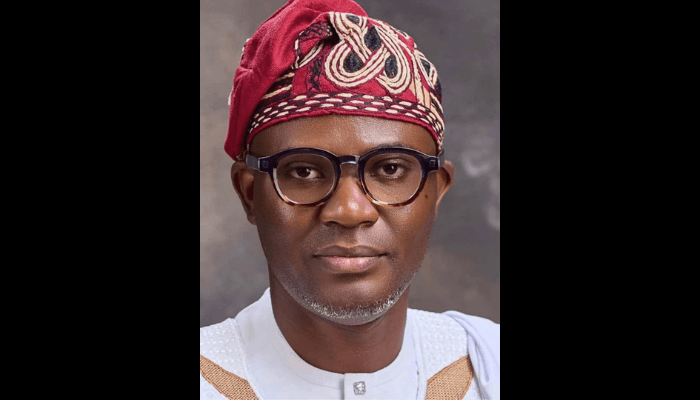
Adelaja Adeoye, a prominent chieftain of the People’s Democratic Party (PDP) in Lagos State, has declared his intention to contest the 2027 governorship election in the state, pledging to usher in a new era of transparency, inclusive governance, and people-centred development.
The entrepreneur disclosed this in an interview with BusinessDay, saying that Lagos has not yet realised its full developmental potential despite decades of economic growth and political stability.
He argued that the continued control of the state by the same political bloc since the return to civilian rule in 1999 has limited the scope for fresh ideas and innovative leadership.
“Since 1999, Lagos has largely remained under the control of the same political structure,” Adeoye said.
“While some progress has been made, the state has not fully maximised its enormous potential to become a truly world-class city and a leading economic hub in Africa.”
Adeoye also criticised what he described as the overbearing influence of national political figures on governance in the state.
He specifically referenced the political dominance of Bola Ahmed Tinubu, a former Lagos governor and current president of Nigeria, arguing that such concentration of political influence has limited broader participation in governance.
He maintained that ordinary residents of Lagos have not fully enjoyed the dividends of democracy and pledged that his administration would return power to the people through participatory governance.
“One of the key reasons I am stepping forward is to return power to the people so they can have a meaningful say in how the state is run,” he said.
Adeoye stressed that transparency and accountability would be the pillars of his administration if elected.
He promised to open up government processes to public scrutiny and to involve citizens and stakeholders in budget preparation to ensure that government spending reflects the needs and priorities of the people.
He also pledged to prioritise critical sectors such as healthcare, education, infrastructure, and civil service reform.
According to him, a revitalised public service system would be key to delivering efficient governance and sustainable development across the state.
Education, he said, would receive special attention through scholarship schemes and policies designed to expand access to quality learning opportunities for young people across Lagos.
On infrastructure, Adeoye noted that development must extend beyond the traditional commercial districts to include underserved communities.
He argued that equitable distribution of development projects would help bridge existing socio-economic gaps across the state.
Another central component of his policy agenda is the full domestication of local government autonomy. Adeoye emphasised that local governments remain the closest tier of government to the people and should be empowered to deliver essential services more effectively.
“Local governments must be allowed to function independently so they can address the immediate needs of their communities,” he said.
Adeoye also identified unity among Lagos residents as a major challenge that requires urgent attention.
According to him, ethnic tensions have increasingly become a feature of the state’s political discourse, often fueled by politicians seeking to mobilise support along identity lines.
He warned that such divisions could undermine the long-standing culture of coexistence in Lagos, which has historically been a melting pot of Nigeria’s diverse ethnic and cultural groups.
To address this issue, he promised to introduce policies and programmes aimed at strengthening social cohesion and promoting harmony between indigenous communities and other residents.
“Lagos belongs to everyone who lives and contributes to its development,” Adeoye said. “We must build a society where indigenes and residents alike have equal opportunities to thrive.”
In addition to social unity, Adeoye said his administration would focus on strengthening security, enforcing law and order, and protecting the rights of citizens.
He emphasised that any government under his leadership would maintain strict policies against human rights violations and ensure that security agencies operate within the bounds of the law.
Transportation reform is also high on his agenda. Adeoye noted that Lagos continues to grapple with severe traffic congestion and inadequate transportation infrastructure despite its status as Nigeria’s economic nerve centre.
He pledged to pursue innovative transport policies that would improve mobility, reduce commuting time, and enhance productivity for millions of residents who rely on the city’s complex transportation network.
Adeoye also stressed that economic empowerment would be a major focus of his administration, particularly for young people and small business owners who form a large part of the state’s population.
He noted that Lagos thrives on entrepreneurship and informal economic activity, yet many young entrepreneurs struggle with access to finance, infrastructure, and supportive policies.
According to him, his government would introduce programmes aimed at supporting small and medium-scale enterprises, expanding skills development initiatives, and creating an enabling environment for innovation and investment.
He argued that strengthening the state’s economic base at the grassroots level would not only reduce unemployment but also stimulate sustainable growth across communities.
Adeoye’s political journey spans several years of party activism and strategic engagement within Nigeria’s political landscape.
A graduate of the University of Lagos, he also holds a master’s degree in Property Development and Management from Lead City University.
His political career gained national visibility in 2017, when he served as the pioneer State Publicity Secretary of the Action Democratic Party (ADP) in Lagos.
Two years later, in 2019, he rose to become the party’s National Publicity Secretary, a role that placed him at the forefront of the party’s national communications strategy.
In 2022, Adeoye further deepened his political engagement when he declared his ambition to represent Oshodi-Isolo Federal Constituency II in the House of Representatives under the PDP platform.
Within PDP circles in Lagos, Adeoye has also become known for his involvement in internal consultations aimed at repositioning the party in the state.
He has contributed to discussions on zoning arrangements and strategic planning ahead of the 2027 elections.
Political observers say his emerging governorship ambition reflects a broader effort by PDP stakeholders to rebuild the party’s electoral fortunes in Lagos after years of setbacks and internal divisions.
Supporters argue that his background in media communications, entrepreneurship, and grassroots engagement could help reconnect the PDP with voters, particularly younger constituents seeking fresh leadership perspectives.
Adeoye himself remains confident that a renewed PDP can offer Lagosians a credible alternative in 2027.
“We will work hard to dislodge the ruling APC,” he said, adding that the current governor, Babajide Sanwo-Olu, should be the last Lagos governor produced by the APC.
With the 2027 election still some distance away, Adeoye’s declaration signals the beginning of what is expected to be an intense political contest in Nigeria’s most politically and economically significant state.
Join BusinessDay whatsapp Channel, to stay up to date
Open In Whatsapp