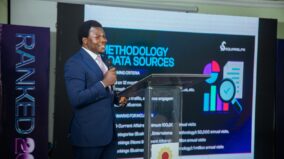
Gilbert F. Houngbo, director-general of the International Labour Organisation (ILO), recently described gender equality at work as “smart economics”, stressing that when women participate fully in the workforce, economies grow faster and become more resilient.

Gender equality is often discussed as a human rights issue, but Houngbo has argued that it is also an economic strategy.

Read also:Women dominated roles twice likely to face AI job disruption- ILO report

As he put it:
“Gender equality at work is essential. It is a matter of rights. It is a matter of fairness. It is also smart economics. Societies are stronger and economies more resilient when women can contribute fully.

According to him, gender equality has several interconnected dimensions. It is first a matter of rights because women deserve equal opportunities and treatment in the workplace. It is also a matter of fairness, since discrimination, unequal pay and unsafe working environments undermine social justice. Beyond these principles, however, gender equality is also an economic imperative because economies perform better when women are able to contribute fully.

The logic behind this argument is straightforward. When barriers prevent women from working, earning fairly or advancing in their careers, a country effectively wastes a large portion of its human capital. Removing these barriers increases labour supply, productivity, household income and overall economic output.

Houngbo therefore called for practical measures such as closing the gender pay gap, ensuring workplaces are free from violence and harassment, strengthening maternity protection and expanding care systems so that workers with family responsibilities can remain economically active.

Read also:

“Strong maternity protection is a right. Workers with family responsibilities must be supported. Care systems must enable everyone to enter, remain in, and advance in the labour market.”

For a country like Nigeria, the idea that gender equality is smart economics is particularly relevant. Nigeria has one of the largest populations in Africa, with women making up nearly half of the population, yet female participation in the formal economy remains lower than that of men.

Many women work in informal sectors with limited protections, lower pay and fewer opportunities for career progression.

If more Nigerian women had access to decent jobs, skills training and fair pay, the country’s productive capacity would expand significantly. Women’s economic participation also strengthens households and communities because income earned by women is often invested in children’s education, health and family wellbeing, contributing to stronger human capital development.

Greater gender equality can also help address poverty. With unemployment and economic pressures affecting many households in Nigeria, expanding opportunities for women in sectors such as entrepreneurship, agriculture, manufacturing and the digital economy can boost household incomes and stimulate broader economic growth.

Businesses themselves also benefit from gender-inclusive workplaces. Companies that encourage diversity often report stronger innovation, improved governance and better financial performance. For Nigerian organisations seeking to compete in a global economy, creating inclusive work environments can therefore enhance productivity and competitiveness.

Another important issue is the burden of unpaid care work, which often limits women’s participation in the labour market. Expanding childcare services, enforcing maternity protections and supporting flexible work arrangements could make it easier for women to enter and remain in employment.

Houngbo emphasised that achieving gender equality requires more than commitments on paper. International labour standards already provide frameworks for equal pay, workplace safety and the freedom to organise, but implementation remains critical.

He therefore stressed the need for decisive action:
“We need urgency. We need accountability. We need more action now so that every woman, everywhere, can work in dignity and equality.”

Ngozi Ekugo is a Senior Correspondent at BusinessDay. She holds a Masters in management from the University of Lagos, an undergraduate from University of Lagos, and is in an alumni of Queen's College. Shes currently an associate member of the Chartered Institute of Personnel Management (CIPM). She has a brief experience at Goldman sachs, London in its Human Capital Management division. She is interested in human capital development and is leveraging her varied experience across sectors to report labour and global mobility trends for stakeholders to make informed decisions.

Join BusinessDay whatsapp Channel, to stay up to date

Open In Whatsapp