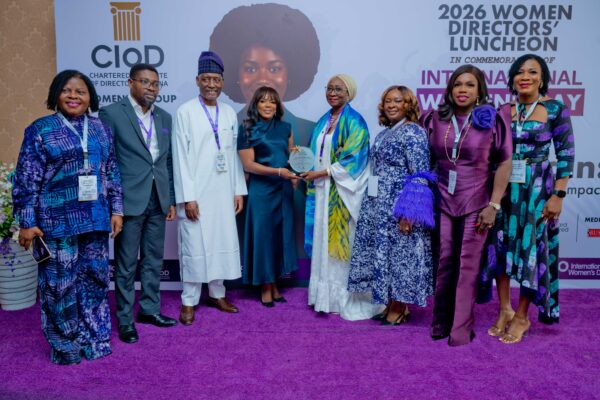
With women still holding only 33 percent of C-suite roles globally, the Chartered Institute of Directors (CIoD) Nigeria is calling for a strategic shift from personal achievement to collective empowerment to bridge the persistent leadership gap.
Speaking at the Women Directors’ Luncheon themed ‘Give to Gain: Leadership, Empathy and Impact,’ industry leaders argued that intentional mentorship and sponsorship are no longer just social aspirations but critical governance imperatives necessary for strengthening institutional performance and driving national development.
read also:IWD: Empowering women fuels innovation, communities, economic growth – Experts
Opening the event, Adetunji Oyebanji, the president and chairman of the governing council of the institute, said that leadership should not be measured by personal achievement but by the number of people empowered to succeed.
“The true measure of leadership is not what we achieve personally, but how many others we empower to succeed,” he said.
He explained that the event’s theme highlights the enduring influence leaders have through mentorship, knowledge sharing, and sponsorship.
“Empowering women in leadership is not merely a social aspiration; it is a governance imperative and a catalyst for national development.”
The luncheon also featured a keynote address by Moji Hunponu-Wusu, chief executive officer of Woodhall Capital, who emphasised the importance of mentorship and sponsorship in building the next generation of leaders.
Read also: https://businessday.ng/news/article/iod-nigeria-gets-charter-status-after-40-years/
According to her, leadership evolves from personal ambition to enabling others to succeed.
“Leadership eventually stops being about what we achieve for ourselves and begins to be measured by what we make possible for others,” she said.
Hunponu-Wusu urged women in positions of influence to intentionally create opportunities for emerging leaders, noting that the real measure of leadership is the number of people empowered through it.
“The real question becomes: who is better because you held that position?” she said.
She added that while financial investment remains important for economic development, the long-term strength of institutions depends largely on investment in people.
“Financial capital is important, but the most powerful capital any society possesses is human capital,” she said.
Despite growing conversations around inclusion, women remain underrepresented in executive leadership globally.
According to a Report by McKinsey & Company titled ‘Women in the Workplace 2025’ women hold about 33 percent of C-suite roles worldwide, highlighting the persistent gap between workforce participation and leadership representation.
Speakers at the event explained that improving women’s representation on boards and in executive management strengthens institutional performance by introducing diverse perspectives and long-term decision-making.
Mentorship and sponsorship remain among the most effective tools for addressing the leadership gap, enabling experienced leaders to guide emerging professionals and build a sustainable pipeline of future directors.
Hunponu-Wusu said intentional mentorship expands leadership impact across generations.
“When we give mentorship, sponsorship, and opportunity, we do not diminish ourselves; we expand our impact,” she said.
One of the panelists at the event noted that progress in women’s leadership must be intentionally built into institutional structures rather than left to chance.
Chiedu Eble said organisations must take deliberate steps to accelerate women’s representation in senior management, adding that improvements are already visible in some institutions.
“In some organisations today, women now make up about 35 percent of senior management, compared with about 17 percent previously, showing that deliberate policies can help close the leadership gap,” he said.
He added that male leaders also have a responsibility to support and encourage women in leadership roles, particularly in environments where traditional mindsets still limit women’s participation in decision-making.
Participants were encouraged to actively mentor and sponsor upcoming female leaders to ensure that leadership pathways remain open and accessible across industries and future generations.

Join BusinessDay whatsapp Channel, to stay up to date
Open In Whatsapp