The Federal Government’s ambition to decentralise economic growth received a significant boost on Wednesday as a major agricultural coalition, the Crop, Aquaculture, Livestock Farmers and Value Chain Economic Actors Association of Nigeria (CALFAN), offered its grassroots infrastructure to drive the Renewed Hope ward development program in pursuit of $1 trillion economy by 2030.
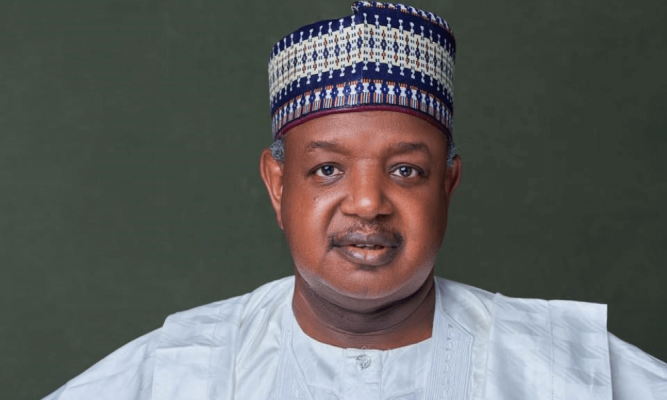
During a meeting with Abubakar Bagudu, Minister of Budget and Economic Planning, in Abuja on Wednesday, the group offered to collaborate with the federal Government to accelerate the implementation of the programme.
Unveiled last year by the President, the programme aims to reset development planning by boosting economic activities at the ward level through collaboration among the federal, state, and local governments.
Bagudu emphasised that the Tinubu-led Administration is moving away from the traditional top-down approach, adding that while the constitution assigns roles to three tiers of government, the execution has often been marred by duplication and inefficiencies.
“The Renewed Hope Ward Development Programms aims to address this by concentrating development planning at the ward level, which is the lowest administrative unit in Nigeria’s governance structure,” Bagudu said.
He stated that Nigeria has 8,809 wards, each with unique economic prospects that can be accessed through targeted interventions. “Our belief is that every ward in Nigeria is an acre of diamonds waiting to be uncovered. Each community has its own strengths and potential, and development strategies must reflect these distinctive qualities,” he said.
Referencing President Bola Tinubu’s vision of transforming Nigeria into a $1 trillion economy, the minister stated that decentralised development initiatives such as the Renewed Hope Ward Development Program would play a key role in unlocking economic opportunities across the country.
He explained that the programme aims to enable communities to identify their own development opportunities rather than relying solely on a top-down approach. Under the initiative, wards will determine their priority economic opportunities, after which the federal government, state governments, local authorities, and development partners will work together to provide the necessary support.
Earlier, Deborah Odoh, Ministry’s Permanent Secretary, noted that agriculture remains a critical pillar of Nigeria’s economic transformation, playing a major role in food security, employment generation, rural development, and economic diversification.
“The Renewed Hope Ward Development Programme aims to unlock economic opportunities at the grassroots level by supporting community-driven initiatives that can boost productivity and prosperity within each ward across the federation,” she said.
She added that working with organised groups like CALFAN could help improve programme delivery and strengthen engagement with farmers, co-operatives, producers, and other stakeholders across the agricultural value chain.
Aliyu Abdulraheem, CALFAN’s National President, outlined the Association’s proposal to serve as a field-level implementation partner for the Renewed Hope Ward Development Programme.
He highlighted CALFAN’s extensive grassroots structure, including Ward-Level Extension Service Offices (WESOs) and a digital platform designed to support real-time beneficiary identification, community mobilization, data collection, and monitoring of development activities.
The presentation states that the proposed platform will facilitate economic mapping of rural communities, infrastructure assessments, digital surveys, and real-time data collection to support evidence-based policy decisions and programme monitoring. CALFAN highlighted its inclusive approach that encompasses the entire agricultural value chain, including farmers, input suppliers, processors, transporters, traders, and service providers.

Join BusinessDay whatsapp Channel, to stay up to date
Open In Whatsapp