
On a humid Lagos morning, thousands of financial transactions move silently across the internet: savings deposited through a mobile app, groceries purchased online, a startup paying its developers through a digital wallet. The speed and ease with which these exchanges occur today would have been unimaginable in Nigeria two decades ago.
Yet behind the convenience lies a chain of builders – engineers, entrepreneurs and professionals – whose work has helped reconfigure how value is created in Africa’s largest economy.
Among them are five women whose careers illuminate the breadth of what BusinessDay calls the Go Local economy: the movement to convert Nigeria’s raw potential into structured markets, competitive industries and indigenous brands.
Read also: What International Women’s Day looked like in two Lagos classrooms
Their sectors differ – law, agribusiness, beauty, financial technology and telecommunications engineering – but the strategic logic connecting them is unmistakable. Each has built systems that allow Nigerian enterprise to scale locally before competing globally.
1. Adetola Ayodele-Oni
Law, governance and the architecture of markets

In the quiet corridors where contracts shape industries, Adetola Ayodele-Oni has built a career at the intersection of law, enterprise and economic structure.
A trained lawyer and managing partner of Karren Walters Attorneys, Ayodele-Oni has spent years advising corporations, investors and high-net-worth individuals across a wide spectrum of commercial and corporate matters. Her practice spans both contentious and non-contentious legal work – from real estate transactions to corporate advisory and governance frameworks.
But to understand her impact purely in legal terms would miss the deeper narrative. Ayodele-Oni represents a class of professionals quietly shaping Nigeria’s economic infrastructure – the institutional layer that determines whether businesses flourish or falter.
Alongside her legal career, she has also developed a reputation as an entrepreneur and investor. Through ventures such as Harvmoney, a micro-lending institution she co-owns, Ayodele-Oni is directly involved in expanding financial access for small businesses and households.
In many ways, this dual identity – lawyer and entrepreneur – mirrors Nigeria’s evolving economy. Markets today require not only capital and ideas, but also legal architecture capable of supporting innovation and enterprise.
Her work exemplifies an often overlooked dimension of the “Go Local” philosophy. Local economies are not built solely by manufacturers or farmers. They are also built by the professionals who structure transactions, protect assets, and ensure commercial clarity.
If Nigeria’s future economy is to be driven by local enterprise and value creation, professionals like Ayodele-Oni will remain essential to designing the legal frameworks within which that growth can occur.
2. Affiong Williams
Manufacturing Nigeria’s agricultural potential

In 2012, Affiong Williams returned to Nigeria with a deceptively simple idea: turn the country’s abundant fruit harvest into globally competitive consumer products.
That idea became ReelFruit, now widely regarded as one of Nigeria’s leading fruit processing companies. The company produces dried fruit and nut snacks distributed through supermarkets, airlines, schools and hotels while also exporting to international markets.
Williams’ vision was not simply to build a snack brand. It was to solve a structural inefficiency within Nigerian agriculture – the enormous loss of value between harvest and consumer.
Nigeria produces large volumes of mangoes, pineapples and coconuts, yet historically most of this output has been sold raw or wasted due to weak processing capacity. ReelFruit was designed to reverse that equation.
Read also: Empowering the core: BusinessDay celebrates its women with Give to Gain internal forum
The company built an integrated value chain linking farmers across multiple West African countries with processing and packaging infrastructure capable of meeting modern retail standards.
The result is a business model that captures value at every stage of the supply chain.
Williams herself brings a blend of global exposure and local insight to the enterprise. Before founding ReelFruit she worked at Endeavor Global in South Africa, helping high-growth businesses scale.
That experience shaped her belief that Nigeria’s agricultural potential would only translate into wealth when products were processed, branded and distributed effectively.
today ReelFruit products appear in hundreds of retail outlets and international markets – a quiet but powerful demonstration that Nigerian agricultural output can compete globally when value addition becomes the strategic focus.
In a country searching for non-oil exports, Williams’ work illustrates how manufacturing and agribusiness can converge to build globally relevant brands from local produce.
3. Tara Fela-Durotoye
Building Africa’s beauty economy
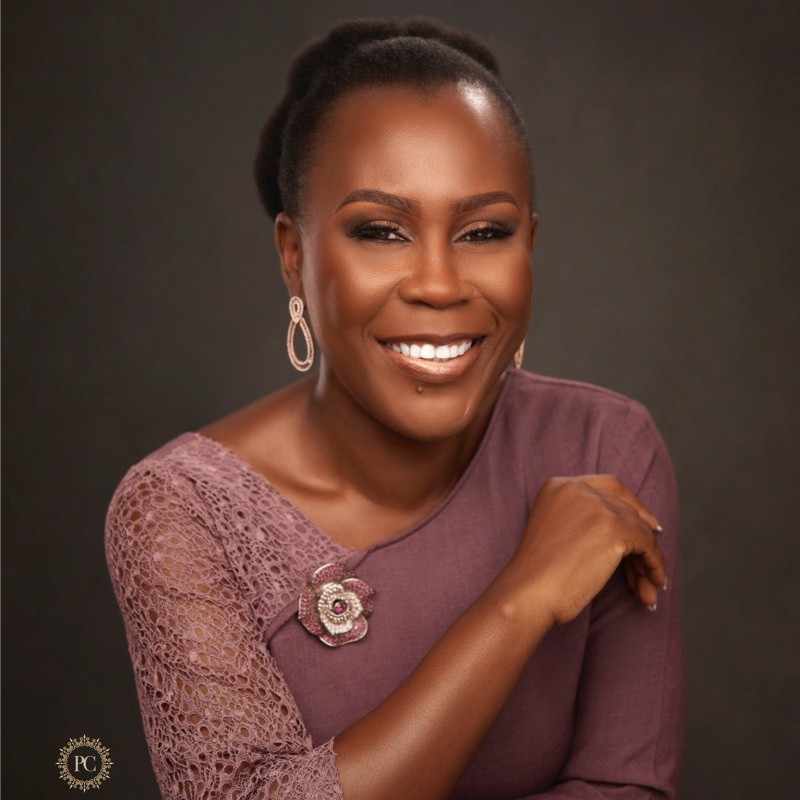
Few entrepreneurs have done more to professionalise an industry in Nigeria than Tara Fela-Durotoye.
In the late 1990s, the country’s beauty sector was largely informal – dominated by small salons and freelance makeup artists. At just 20 years old, while still an undergraduate studying law, Tara began a small makeup business from her living room with ₦15,000 in capital.
That modest experiment would eventually grow into House of Tara International, one of Africa’s most influential indigenous beauty brands.
The company pioneered several industry “firsts” in Nigeria: the country’s first bridal directory, the first professional makeup school, and one of the earliest indigenous cosmetics product lines.
Over time, House of Tara evolved into a full ecosystem – combining product development, retail studios, beauty academies and a distribution network of thousands of representatives.
By 2019, the brand had developed more than 270 beauty products, 23 stores and a network of 10,000 representatives across Africa, making it one of the continent’s most recognised indigenous cosmetic brands.
Yet perhaps Tara’s greatest impact lies beyond product lines.
Through initiatives such as the Tara Beauty Entrepreneur programme, she has helped thousands of women build independent businesses in the beauty industry.
In doing so, she effectively transformed beauty from a personal service into a structured economic ecosystem.
International recognition followed. She has been named among Forbes’ 20 Young Power Women in Africa and listed among the continent’s most powerful women in business.
today, House of Tara stands as one of the most compelling examples of how indigenous brands can shape consumer culture while creating entirely new markets.
4. Odunayo Eweniyi
Engineering Nigeria’s digital financial infrastructure

If the next generation of Nigerian economic leaders are building digital infrastructure rather than factories, Odunayo Eweniyi is among its most influential architects.
A first-class graduate of computer engineering from Covenant University, Eweniyi co-founded PiggyVest, one of Nigeria’s largest digital savings and investment platforms.
Originally launched in 2016 as Piggybank, the platform was designed to solve a behavioural problem that had long plagued personal finance in Nigeria: the difficulty of disciplined savings.
By combining automation, financial incentives and user-friendly design, PiggyVest enabled millions of Nigerians to build savings habits through technology.
today the platform serves millions of users and has raised venture capital funding to scale its operations, positioning itself as one of Africa’s most influential fintech companies.
Eweniyi’s influence extends beyond the platform itself.
She is also a co-founder of FirstCheck Africa, a venture fund focused on investing in technology startups led by women.
Through that initiative, she is helping address one of the most persistent challenges in African technology — access to early-stage capital for female founders.
Her leadership has earned global recognition. She has appeared on the Bloomberg50 list of innovators, been named to TIME’s 100 Next, and received the Forbes Africa Technology and Innovation Award.
What makes Eweniyi particularly significant within the Go Local narrative is that she represents a different kind of industrialisation.
Not factories.
Not farmland.
But digital infrastructure capable of mobilising savings, capital and entrepreneurship at scale.
5. Funke Opeke
Engineering the digital backbone
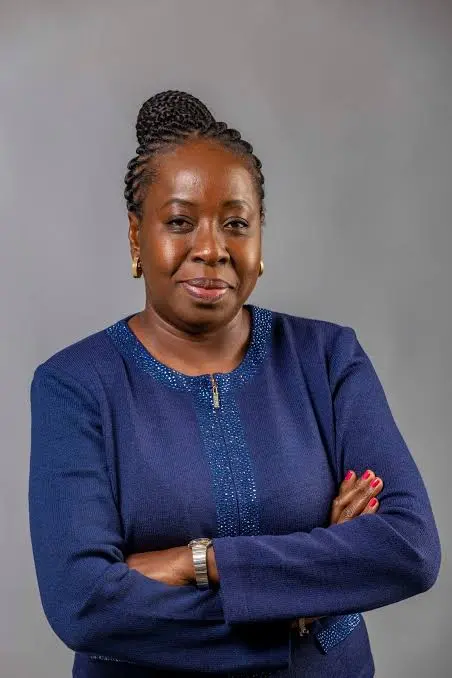
For Funke Opeke, the challenge was physical infrastructure.
An electrical engineer trained at Obafemi Awolowo University with a master’s degree from Columbia University, Opeke spent years in the United States telecommunications sector before returning home in the mid-2000s. What she encountered was a country with enormous digital potential but fragile connectivity. Internet bandwidth was limited, heavily dependent on satellite connections, and expensive.
The solution she pursued was audacious.
Through MainOne, the company she founded in 2008, Opeke led the construction of a 7,000-kilometre submarine fibre-optic cable connecting West Africa to Europe. The $240 million project, completed in 2010, dramatically expanded broadband capacity across Nigeria, Ghana, Côte d’Ivoire and Senegal.
It was a defining moment for West Africa’s digital infrastructure. Faster, cheaper connectivity accelerated the growth of Nigeria’s technology ecosystem — enabling fintech companies, streaming platforms, digital media firms and online marketplaces to flourish. MainOne later expanded into data centres and terrestrial fibre networks, turning Lagos into one of the region’s most important internet hubs.
today, when millions of Nigerians use digital banking apps or participate in the online economy, much of the data travels across networks that Opeke helped build.
The architecture of a new economy
Taken together, the careers of these five women illustrate the complexity of Nigeria’s emerging Go Local economy.
Each represents a different layer of the economic stack.
Their stories remind us that the future of Nigeria’s economy will not be defined solely by natural resources. It will be shaped by those who design the structures through which those resources – and ideas – are transformed into lasting wealth.

Join BusinessDay whatsapp Channel, to stay up to date
Open In Whatsapp