


On the last day of the month of February in 2026, the United States military; alongside the Israel Defense Forces (IDF); launched what the Americans tagged ‘Operation Epic Fury” on Iran. Since then, the international crude oil market has gone into turmoil with spiking prices climbing to highs not seen since 2022 as well as downward swings.
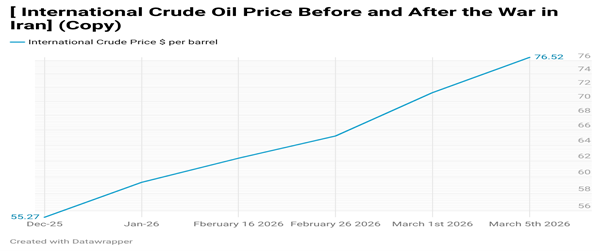
CHART: BUSINESSDAY SOURCE: TRADING ECONOMICS
This is not only because of the many oil producing nations; Iran, America, Kuwait, Saudi Arabia and other Gulf Arab States; being involved in the war but also because the chokehold; the strait of Hormuz where a fifth of global oil passes through; is being threatened with Iran threatening to attack or set ablaze any vessel that passes through the waterway. Hence, all major shipping lines as well as insurance companies are circumspect about plying it, even with American assurances.
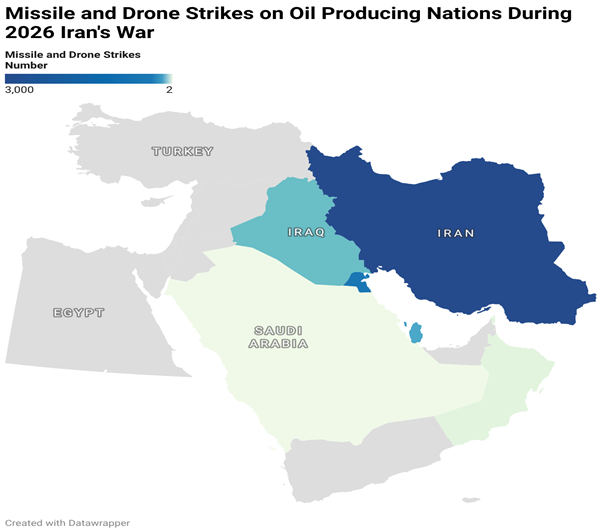
Credit: BusinessDay
Nigeria has been an oil-dependent economy for decades now, most especially in two aspects, namely- foreign exchange earnings and government revenue. And this has come with a huge blessing and a curse alike. Oil has been a huge blessing as it has made Nigeria awash in petrodollar for decades which has largely funded government expenditure with little to no support from the non-oil sources, until recently when the authorities have nobly been consciously trying to steer Nigeria’s public fiscal structure away from over-dependence on oil revenue.
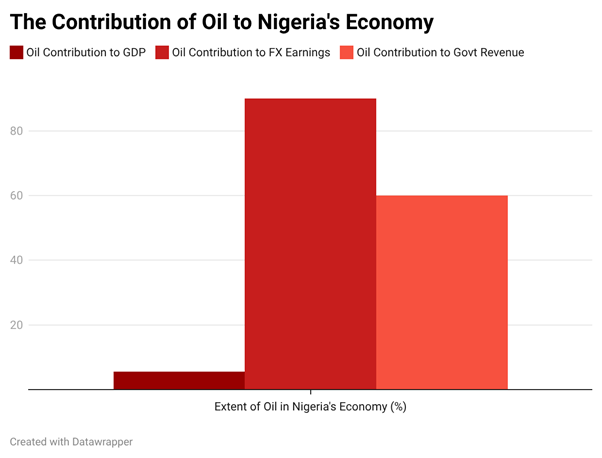
CHART: BUSINESSDAY SOURCE: ANDERSEN, 2025
High international oil price is a curse, however, as it has proven Nigeria’s undoing and Achilles heel again and again; through its volatility and because Nigeria is addicted to it. Nigeria’s overreliance on oil revenue, in the sense that it cannot do without it for two aforementioned reasons, as demonstrated on the chart.
The Old Paradox
Nigeria had a catch-22 situation before the coming of the Tinubu administration. This was when refined fuel subsidy was being paid. This conundrum meant high oil prices were a huge relief on one hand, and a big burden on the other hand.
High oil prices were an anodyne because that meant the coffers of the Nigerian state would be bursting at the seams with petrodollar. This meant more foreign exchange (FX) earnings with accompanying bigger reserves; stronger Nigerian Naira (NGN); bigger fiscal buffers for the Nigerian people and bigger economy as a result of the expansion from the oil sector.
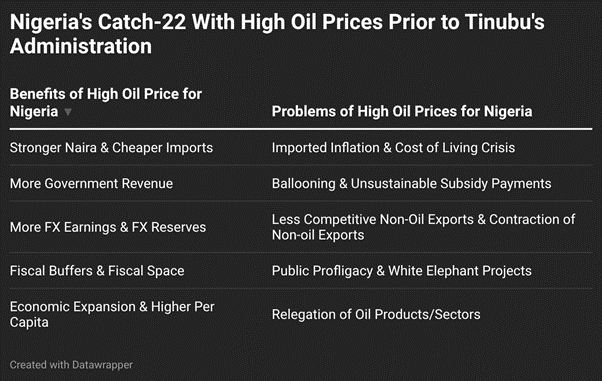
CHART: BUSINESSDAY SOURCE: BD RESEARCH, 2026
However, this was a problem. This is so because it meant higher subsidy payment, less competitive non-oil exports, heightening of volatility as well as uncertainty, imported inflation and profligacy by elements within government with white elephant projects and the relegation of other products and sectors of the Nigerian economy.
The crux being that, higher oil prices generated so much government revenue but also so much subsidy payment. This was the problem for almost 50 years that Nigeria had subsidies on refined fuel for its citizens.
The New Oddity
Since the advent of the current administration in Nigeria under Bola Tinubu. The economic reforms introduced by the Nigerian government at the centre, include subsidy removal. This means mounting subsidy payment for domestic consumption of refined fuel is gone. This changes the puzzle for Nigeria when international price of crude oil climbs during a shock.
With the US-Israel and Iran War in 2026, and international oil price climbing, this means another round of good fortune alongside misfortune. The good luck has not changed from the days of paying subsidy on refined fuel. The main blessing being Nigeria’s brimming public treasury. Nonetheless, bad luck has changed. Since fuel subsidy has been phased out, what constitutes a problem now is higher pump price of fuel, inflation as well as exacerbation of the cost-of-living crisis, non-translation of high oil revenue and hardship for Nigerians.
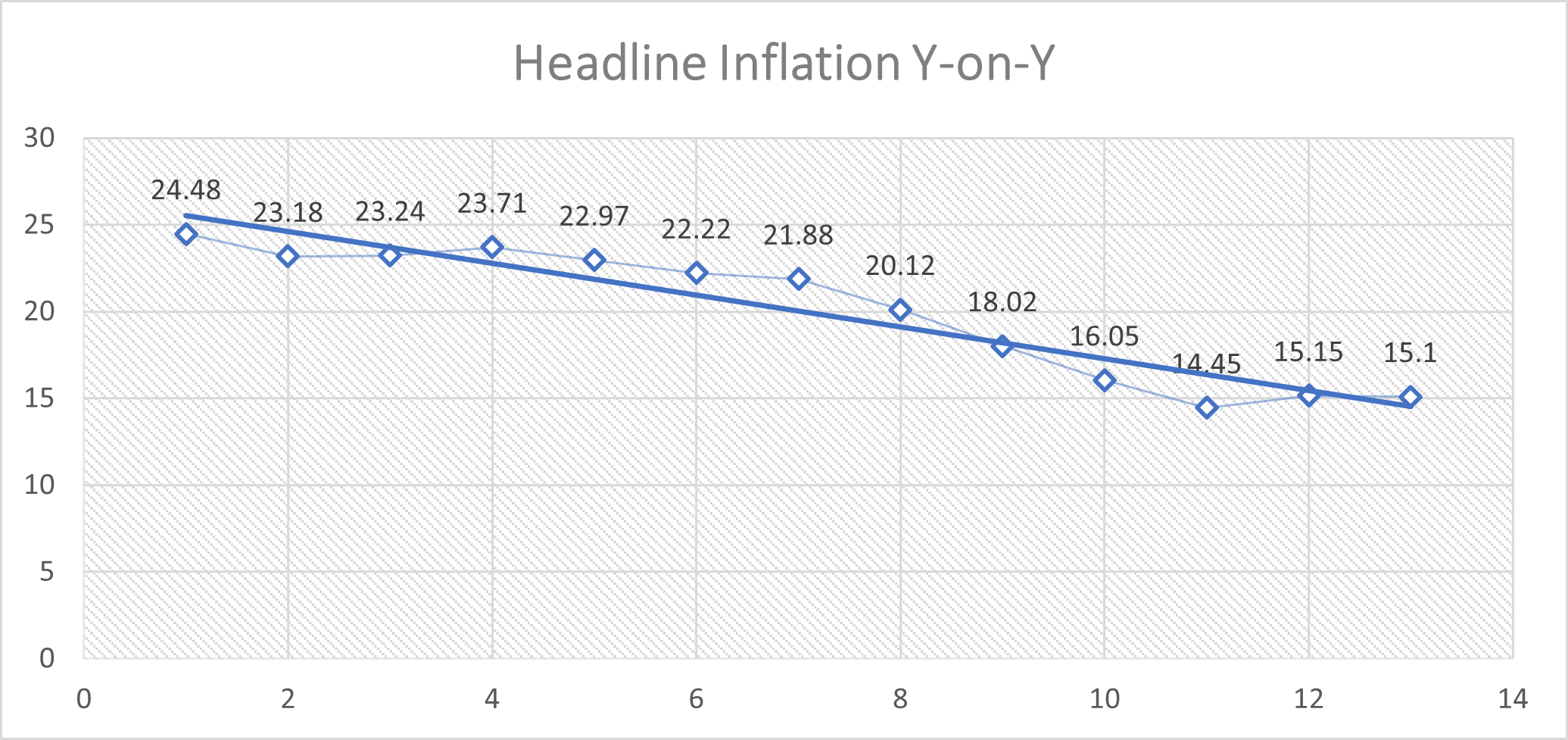
CHART: BUSINESSDAY
The big difference now that subsidy is gone; as President Tinubu famously said on the day of his inauguration; is high pump price of fuel. This will compound cost of living crisis most especially for the poorest and most vulnerable Nigerians. Before Tinubu’s tenure, this addition in price of fuel would have been borne by the state. Now that the state does not bear the extra cost in the form of subsidy, this could flare up inflation in a far worse than it could have been if it was paying for subsidy.
Conclusion
High oil price is a result of a shock that would last while the conflict lasts. Consequently, Nigeria should not allow this conflict to go to waste. Sadly, due to structural challenges, producing below OPEC quota and many other problems around oil production like oil theft, pipeline vandalism, low investments in the sector and many more, Nigeria’s oil industry has been a laggard. And its incapacity to take advantage of this, as it is from a far-flung part of the world not affected by the threats in the strait of Hormuz. Nigeria should be reaping bountifully as a result.

Join BusinessDay whatsapp Channel, to stay up to date
Open In Whatsapp


