…boost justice access in NorthWest Nigeria
A United Kingdom funded peacebuilding and justice reform programme has recorded measurable improvements in community safety, civic participation and access to legal protection across four conflict affected states in Northwest Nigeria.
The intervention, financed by the Foreign, Commonwealth & Development Office through its Integrated Security Fund, was implemented by Global Rights in Kano and Sokoto and Partners West Africa Nigeria in Katsina and Kebbi.
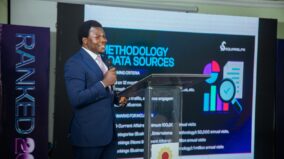
Outcomes were presented at the 2026 Northwest Regional Conference on Women, Peace and Security in Abuja, on Tuesday.
Read also: I have lived peaceful in South Africa over 15 years because I stay within the ambit of the law
The programme targeted communities facing banditry, inter communal violence, youth unrest and persistent gender based violence. It institutionalised Community Dialogue Committees, strengthened Gender Based Violence Response Teams and expanded the Police Duty Solicitor Scheme to provide legal representation at the point of arrest.
Project data showed civic participation in Kano and Sokoto rose from 48% at baseline to 88.2% following structured dialogue platforms and inclusive engagement processes. In Kaduna intervention areas under a complementary initiative, 88% of respondents reported improved community safety and reductions in violent conflict.
Thirty six Police Duty Solicitor Scheme lawyers were deployed across participating states, providing legal services to more than 1,300 detainees and vulnerable community members.
Trust in police divisions with embedded duty solicitors rose by 86.8%. Early Warning and Early Response mechanisms recorded 249 cases in Kaduna alone, many resolved through mediation before escalations.
Women accounted for 56% of direct beneficiaries in Kaduna. In Sokoto, traditional authorities formally appointed women into advisory and cabinet level roles, including turbanning into leadership structures.
Speaking at the conference, “Mathew Kukah, Bishop, Catholic Diocese of Sokoto, said justice is not something you can place on a table and point to, but something that must be felt in the daily lives of citizens, stressing that having a constitution or religious texts is not enough if exclusion and ignorance persist within society.”
He added that communities must move from passively expecting change to actively claiming agency.
“The struggle for justice is a long distance journey, and it demands that citizens understand their rights and responsibilities. Without that consciousness, institutions remain weak and vulnerable to abuse.
“Gill Lever, UK deputy high commissioner British High Commission, said the evidence emerging from the programme demonstrates that community driven and gender responsive approaches to peace and security produce tangible results.”
She added, “When women and marginalised groups participate meaningfully in peace and justice processes, communities become safer, more resilient and more cohesive. This is not symbolic inclusion. In Sokoto, we have seen women turbaned into traditional leadership structures. That represents structural change.”
Lever stressed sustainability, saying; “The question now is how these structures are embedded within state systems, how they are financed beyond the project lifecycle and how today’s evidence is translated into long term policy and practice.”
“Global Rights, country manager, Olubunmi Aweda, said sustainable peace cannot be delivered to communities but must be built with them, noting that the project deliberately institutionalised Community Dialogue Committees as structured mediation platforms rather than ad hoc crisis meetings.”
She said the organisation strengthened six Gender Based Violence Response Teams and expanded the Police Duty Solicitor Scheme beyond initial projections.
“We recruited and deployed 24 duty solicitors in Kano and Sokoto alone, reaching 855 detainees and community members with pro bono legal services. Where legal safeguards are embedded at the point of arrest, downstream justice outcomes improve significantly.”
Aweda noted that participation gains reflected restored legitimacy. “When communities see inclusive and predictable systems, they engage. That is why we recorded civic participation increasing to over 88 percent in intervention areas.”
Read also: Fubara gives clearest sign of readiness to comply with peace deal, ready only to complete projects
“Kemi Okenyodo, executive director, Partners for West Africa, PWAN, said the intervention reinforced that inclusive peacebuilding strengthens confidence in governance.”
She explained that in Katsina and Kebbi, the organisation established and strengthened Community Safety Dialogue and Partnership structures while improving community police relations and expanding legal access mechanisms.
“Our experience shows that inclusive platforms amplify women’s voices, respectful institutional engagement builds trust and accessible justice strengthens citizen confidence. Peace is sustained through partnerships between civil society, government, institutions and communities,” Okenyodo said.
Stakeholders at the conference emphasised that while insecurity has not been eliminated, the project strengthened systems, improved institutional accountability and enhanced women’s leadership within traditional governance frameworks.
Participants called for formal state level adoption of Community Dialogue Committees and the Police Duty Solicitor Scheme to consolidate gains and secure long term stability across the Northwest.

Join BusinessDay whatsapp Channel, to stay up to date
Open In Whatsapp