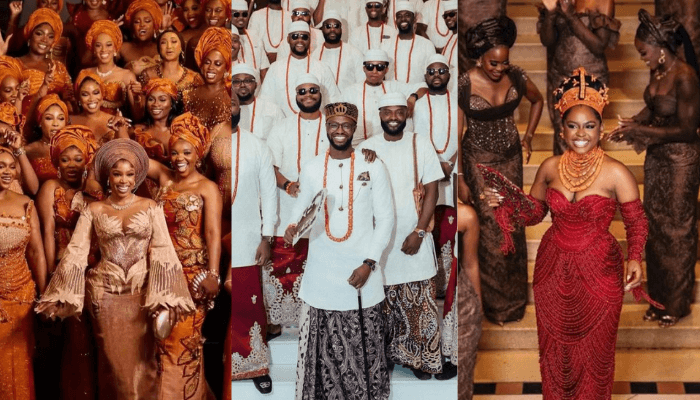
In Nigeria’s vibrant social landscape, Asoebi stands as one of the most powerful expressions of culture, fashion, and community as powerfully as Asoebi.Deeply rooted in Yoruba cultural tradition, Asoebi is most commonly associated with weddings and milestone celebrations.

The tradition of wearing matching fabrics among family, friends, and associates has evolved into a defining feature of Nigerian social life, not only as a striking expression of fashion and colour but as a powerful cultural language that communicates identity, solidarity, status, and belonging.

Asoebi originally emerged as a practice of communal celebration within the Yoruba society, where families selected specific fabrics to visually represent unity and shared participation during important ceremonies, visually signifying loyalty and collective participation.

Over time, this practice expanded beyond immediate kinship groups to include extended family members, friends, and social associates.

What began as a simple cultural expression as today gradually transformed into one of Nigeria’s most recognizable social traditions, symbolizing community, celebration, and shared identity.

Beyond its cultural symbolism, Asoebi has grown into a thriving economic and creative industry. Textile merchants, designers, tailors, makeup artists, and event planners all benefit from the growing demand for premium fabrics and customized styling. Social media has further amplified Asoebi culture, allowing designs and trends to gain global visibility and influence contemporary fashion conversations.

It encourages individuality. Guests often work with designers and stylists to create unique fashion interpretations from the same fabric.

Women often experiment with diverse silhouettes, from flowing ball gowns and fitted corset dresses to traditional wrappers paired with modern blouses. Accessories also play a major role, with elaborate gele headpieces, statement jewellery, and carefully selected handbags completing the look.

For men, Asoebi styling often includes agbadas, senator styles, or contemporary tailored suits that blend traditional elegance with modern fashion cuts.In recent years, professional stylists and fashion designers have become central to Asoebi preparation, helping clients achieve highly personalized and sophisticated looks.

This emphasis on styling has turned Asoebi into a social fashion competition of sorts, where creativity, elegance, and presentation contribute to the overall spectacle of celebrations.This creative competition has helped push Nigerian fashion design into global recognition.

Colour is one of the most important emotional and cultural elements of Asoebi. Colour selection helps set the tone of events while communicating subtle social messages.

Luxury shades such as gold and champagne often symbolize wealth and prestige, while white represents purity and spiritual significance, especially in weddings.

Bold and vibrant colours reflect celebration, confidence, and social vitality, helping transform gatherings into visually striking cultural displays.

Till today aseobi continues to reflect values of identity, unity, and social connection.As celebrations grow more elaborate and style-conscious, Asoebi continues to evolve balancing tradition with innovation, heritage with high fashion.

To examine Asoebi, therefore, is to explore more than party attire; it is to engage with a living tradition that reflects Nigeria’s history, aspirations, and enduring commitment to communal celebration.

Join BusinessDay whatsapp Channel, to stay up to date

Open In Whatsapp