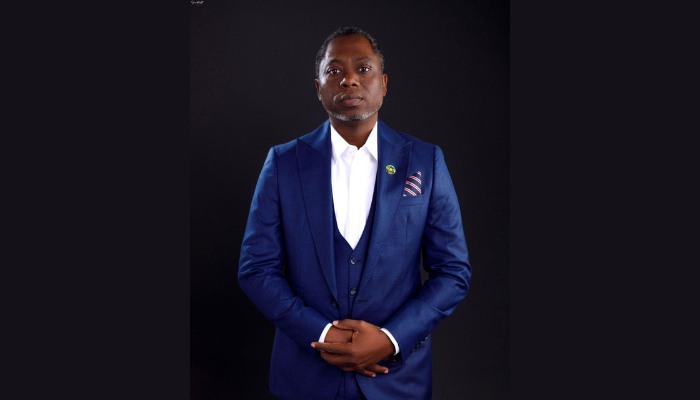
Some careers are loud. They gather headlines, titles, and applause.
Others are consequential in a different way: they build systems that work, protect the public interest when nobody is watching, and leave institutions stronger than they met them.
As Mr Steve Zakka Ayuba marks his 60th birthday today and retires as a Director at the Nigerian Midstream and Downstream Petroleum Regulatory Authority (NMDPRA), Nigeria is celebrating more than a man. It is celebrating a standard: integrity that does not bend, dedication that does not fade, and humility that does not perform.
From DPR to NMDPRA: A career anchored in public value
Steve’s journey from the Department of Petroleum Resources (DPR) to NMDPRA reflects the evolution of Nigeria’s petroleum governance itself: from oversight to modern regulation, from administration to market design, from compliance to credibility.
In DPR, he served in strategic planning and budgeting roles, where nation-building often looks like precision: asking the right questions, defending the numbers, and ensuring scarce resources translate into real outcomes. In 2019, during a high-level engagement with lawmakers, an official account noted that his presentation as Assistant Director (Budget and Strategic Planning) drew strong attention and interest, a signal of the clarity and rigour with which he carried the public case for petroleum sector governance.
At NMDPRA, he continued to operate where effective regulation truly lives: at the intersection of policy intent and operational execution.
He spoke publicly about the Authority’s role in ensuring energy availability and efficiency, making energy accessible, affordable, and environmentally responsible, while also creating a more investable environment for Nigeria.  This is not small talk. It is strategic leadership translated into regulatory legitimacy.
He also articulated, in clear market language, how Nigeria’s pricing frameworks have shifted over time toward more cost-reflective and market-based structures, including the transition from earlier regimes into the Petroleum Industry Act era.  In a country where energy policy is never abstract, that kind of clarity is a public service.
And beyond formal platforms, his work has been linked to pragmatic stakeholder engagement: convening, listening, and exploring partnership pathways that help credible innovators align with national priorities. 
The leadership signature people remember
What makes Steve’s story powerful is not just what he did, but how he did it.
Integrity. The kind that shows up as consistency: one standard in public, the same standard in private. In regulation, integrity is not a virtue poster. It is risk management. It is trust. It is legitimacy.
Attention to detail. In the petroleum sector, detail is not pedantry. It is safety, value creation, and national stability. Steve’s edge has long been his insistence that outcomes must be engineered, not hoped for.
Humility. Many people chase influence by trying to be seen. Steve built influence by trying to get it right. That is why his credibility travelled across teams and across time.
Commitment to uplifting others. His impact is not only in systems and policies, but in people. The quiet encouragement, the careful guidance, the deliberate mentoring. The kind that never trends, but always transforms.
A TEXEM alumnus, five times over
Leadership is not a destination. It is a discipline.
Steve is also a proud TEXEM alumnus, having participated in five executive development programmes, a testament to his commitment to continuous learning, self-renewal, and strategic growth even at the highest levels of responsibility. 
That matters. Because the leaders who endure are not the leaders who know everything. They are the leaders who keep learning.
A punchy tribute from TEXEM’s Founder
Dr Alim Abubakre, Founder of TEXEM, UK, captures Steve’s essence simply:
“Steve Ayuba is proof that the most powerful leadership is often quiet: clarity without noise, integrity without theatre, and impact without self-promotion.”
The strategic leadership words that define his legacy
Harvard Business Review’s strategic leadership language often centres on capabilities like anticipating, challenging assumptions, interpreting signals, deciding under uncertainty, aligning people, and learning continuously.  Steve’s career has embodied those skills in a context where the cost of error is national.
If you had to summarise his leadership using 30 HBR-grade strategic leadership keywords, they would read like this:
Purpose, vision, integrity, trust, accountability, governance, stewardship, strategy, strategic clarity, alignment, execution, prioritisation, decision-making, judgement, risk management, resilience, agility, adaptation, learning, innovation, transformation, stakeholder value, legitimacy, collaboration, influence, empowerment, culture, performance, transparency, sustainability. 
A closing message to every leader watching
Steve Zakka Ayuba’s retirement is a reminder that nation-building is not always dramatic.
Sometimes it is a spreadsheet that protects public funds.
A policy note that prevents distortion.
A meeting where the right question saves millions.
A decision made with courage, not convenience.
A junior colleague strengthened by one timely sentence.
At 60, Steve’s story tells the next generation of leaders something profound:
You do not need to be the loudest in the room to be the difference.
You need to be the clearest.
The most consistent.
The most trustworthy.
Nigeria is better because he served.

Join BusinessDay whatsapp Channel, to stay up to date
Open In Whatsapp