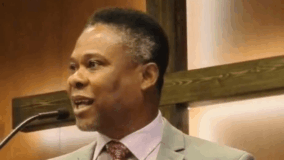
Sam Amadi, former chairman of the Nigerian Electricity Regulatory Commission (NERC) and director of the Abuja School of Social and Political Thoughts, says the federal government’s N58.47 trillion 2026 budget currently before NASS is too weak to rescue an economy built on flawed assumptions. In this interview with BusinessDay’s Tony Ailemen and Cynthia Egboboh, Amadi argues that poor budget integrity, weak implementation, and the absence of a coherent economic framework will limit impact. He warns that headline spending figures cannot offset rising living costs, policy missteps, and eroding public trust in institutions like INEC, which he describes as structurally deficient. He also critiques power sector privatisation, citing regulatory failures and inefficiencies, and outlines reforms he believes are necessary to restore growth and public confidence... Excerpts…
Let’s start with the N58.47 trillion 2026 federal budget, which is still under debate in the National Assembly. What is your assessment of the proposed spending?
I think there’s a danger in assuming that what we see in the budget is what will actually happen. Past budgets show a worrying pattern: we’ve often had multiple budgets running simultaneously, projects left unfunded, and significant revenue shortfalls. The President has promised that 2026 will be the last of such cases, but that raises a key question — why did we allow this to happen in the first place? Even in 2025, when oil prices were stable and there were no major disruptions, budget performance was among the lowest in recent times. This points to deeper problems with the integrity and seriousness of our budgeting process. For example, the Medium-Term Expenditure Framework (MTEF), which is supposed to guide multi-year planning, was only approved after the budget itself had been prepared — essentially just to allow the President to submit it. This breach of process, and the lack of rigorous analysis behind the numbers suggests that the budget is not fully reliable. Overall, the budget does not reflect a structured plan for prioritising needs and ensuring realistic funding. Legal adjustments and rollbacks for undelivered capital projects have become routine, highlighting flaws in both economic planning and execution.
Look, a budget should flow from realistic economic planning, and for it to be credible, we should expect around 80 percent implementation. Unfortunately, the 2026 budget before the National Assembly does not inspire much confidence, given the poor performance of previous budgets and avoidable delays. It’s important to read between the lines and look beyond the figures. For example, the government has allocated significant funds for security infrastructure, but what matters is whether these funds are released on time, projects are delivered as planned, and, most importantly, whether they have a real impact. Budgets alone don’t guarantee results. Public administration experts often point out that building schools does not automatically improve learning — you also need student attendance and motivated teachers. Similarly, even if the budget is executed as written, its impact on socioeconomic conditions may still be limited.
In short, while the numbers in the 2026 budget are substantial, there are serious questions about feasibility, implementation, and whether it will translate into meaningful improvements for Nigerians.
What additional factors could make the 2026 budget more effective and impactful?
If, for example, N3 trillion is allocated to security for equipment like aircraft, drones, and other machinery, simply releasing the funds does not guarantee impact. Corruption or mismanagement could mean only a fraction of the intended equipment is procured, which immediately reduces the budget’s effectiveness. Budget performance alone — say 20% out of 100 — does not translate to real impact. Even if the equipment is procured, political will, managerial competence, and a clear security strategy are essential. Drones and other assets must be deployed correctly and at the right time to achieve results. Otherwise, the investment is wasted. Current operations against terrorists and kidnappers illustrate this problem. Many rescues are carried out through negotiations rather than decisive action, and political considerations often limit military effectiveness. Soldiers report being instructed not to strike even when opportunities arise, undermining any advantage gained from equipment procurement. In short, a budget is only one pillar of service delivery. Without strong policy, structured programs, and the political will to execute them effectively, even a well-funded budget will fail to deliver meaningful results.
Nigerians are hoping the budget will ease current hardships. Do you think it offers genuine relief?
The budget is only a framework — its impact depends entirely on how it is implemented. Even now, it allocates limited resources to key drivers of welfare such as education, health, and social protection. In a country like ours, where government policies have contributed to declining living standards, how we manage even these limited resources matters. Access to basic healthcare and education remains poor, and overall, Nigerians are materially worse off than in previous years. For instance, the N70,000 minimum wage today buys far less than the N18,000 wage did three or four years ago. The removal of subsidies, currency fluctuations, and rising costs of food and energy have further eroded living standards. As a result, the average Nigerian is significantly poorer and facing a more difficult life than three years ago. Even the wealthiest Nigerians are worse off in relative terms, and challenges like insecurity and disrupted farming further exacerbate the situation.
The key point is that government policy and economic reforms should be evaluated not just on financial metrics, but on their real impact on people’s livelihoods. This means routinely conducting cost-of-living assessments and considering the social costs of policies, not only their fiscal implications. For instance, consider the N17 trillion spent on pipeline security—how much was projected to be saved from fuel subsidy removal? The savings were actually less than that expenditure. The broader concern is that while eliminating subsidies may appear economically “prudent,” in reality, we are now spending more than necessary—resources that could have been used to maintain subsidies, ensure access to essential goods, and ease the burden on Nigerians. For the average worker, energy costs alone can consume more than half of their income. Policies need to account for these everyday realities, not just abstract financial efficiency.
Ideally, no more than 20% of income should go toward transportation to work, yet Nigerians are also expected to cover healthcare, education, and save for times they cannot work. Today, about 70% of the average Nigerian’s income is spent on transport, electricity, and related costs. For small and medium enterprises, many of which rely on generators, this burden is even higher. This highlights a misalignment between the Tinubu administration’s economic objectives and the social welfare of ordinary Nigerians. Naturally, economic reforms create winners and losers—and in this case, the aristocrats are the clear winners. We often hear claims of “bold policy,” but history shows that successful economic development—whether in Asia or elsewhere—is rarely about boldness; it’s about wisdom. It’s wise reforms, not bold reforms, that drive sustained growth. You cannot slash subsidies, devalue the currency, allow inflation to rise, and pile on taxes, while governments enjoy windfall revenues without investing in productive activities. Jobs are not multiplying, incomes are not rising, and businesses are not growing—yet these measures are being touted as bold reforms. No. The reality is that a budget cannot work miracles if the government’s fundamental economic strategy is flawed.
Let’s turn to politics. With the 2027 elections approaching, do you anticipate the opposition parties forming a strong coalition capable of challenging the APC and winning power?
Yes, they can. Apart from God, everything is created. The APC came to power because it was able to unite, effectively deploy propaganda, and take advantage of factors such as internal crises in the ruling party at the time. History, therefore, can repeat itself—but every moment has its own dynamics. As they teach in the U.S. Marines, decisions should be based on situational awareness, not routine. The question now is: what is the current situation? In 2023, there was a perceived opportunity to defeat the APC, but it was missed due to factors such as a divided opposition, alleged irregularities by INEC, and other dynamics. Today, a new opportunity exists. The first step is creating a more unified opposition—not eliminating other parties, but ensuring the main political actors come together. Building the ADC, bringing Peter Obi on board, and maintaining coalition cohesion could significantly improve their chances. Success will ultimately depend on keeping the founding members aligned and communicating a message that resonates with ordinary Nigerians.
In 2023, many Nigerians turned out to vote, including the so-called ‘Obedients’ and a large number of young people who believed that the promise of electoral integrity would be upheld. Many of them are understandably discouraged and disappointed today, but they can be mobilised again. If the opposition can restore hope, strengthen voter confidence, and ensure that INEC is more effectively monitored, the momentum can return. They must also be prepared to resist rigging, intimidation, and what some describe as the Tinubu camp’s hardball political tactics aimed at pressuring or weakening opponents. Ultimately, the current administration is vulnerable because many Nigerians believe it is not delivering adequately on economic and social outcomes. If the opposition gets its strategy right—by uniting, organising effectively, and reconnecting with the electorate—it has a real chance of unseating the government. People often say necessity drives innovation, and sometimes difficult experiences do too. At first, groups may resist working together. But when they realise they cannot succeed on their own, they are more likely to unite. I believe that this year we will see stronger cooperation among opposition parties. There will likely be a greater commitment to working together. However, whether that unity will be enough to achieve their goals remains to be seen. They must also present a presidential candidate who can inspire hope and confidence. Politics is not about perfection. It’s about what is practical and achievable. As the saying goes, politics is the art of the possible — not the ideal or the most desirable, but what can realistically be done.
In every situation, there may be an ideal option, but politics often delivers what is acceptable rather than perfect. Politics is about what people can tolerate and work with. If a coalition produces a candidate whom people genuinely trust and like, victory becomes much easier. However, even if the candidate is not the strongest possible choice but is broadly acceptable, they can still succeed — provided they build a strong message around that person and create a structure that reassures voters. Most Nigerian voters are not rigidly defined by ethnicity, religion, or personal loyalties. In politics, the majority often sits between the two extremes. In the United States, they are referred to as moderates or independents. Nigeria also has a significant number of independent-minded voters — people who will not support someone simply because of shared ethnicity, religion, or social ties. These voters step back and ask important questions: What does this candidacy mean for the country? How will it affect economic wellbeing? What does it mean for our future? I believe this group is large enough to determine the outcome of an election.
That said, disunity remains a major challenge in Nigerian politics today. Many political actors have presidential ambitions at the same time, and managing those competing interests will not be easy. There are also predictions that the APC may face internal challenges. While a strong strategist may have brought different interests together, keeping them united is more difficult — especially when it comes to sharing power and political opportunities. Those who want to become governors, those who are currently governors, and those who have held office before will all be thinking about their political future. If they see a strong opposition emerging, some may decide to align with it for strategic reasons. Even if the opposition does not win the presidency, it could still be strong enough to influence outcomes at the state level and help certain politicians secure their own positions.
We are also likely to see some defections from the APC, especially around the primaries, with some politicians moving to the ADC. In the North, if political arrangements unfold as expected, there could be noticeable shifts from the APC to the ADC — just as we recently saw a wave of defections to the APC. The movement may not be in the same numbers, but it could still be significant. By 2027, we may end up with a more balanced political landscape, with two strong parties competing closely. The outcome may not be predictable in advance. Much will depend on how the campaigns unfold and how votes are counted. If the process is transparent and credible, the final result will reflect the true choice of the voters.
Last year, Vice President Shettima reportedly said only a fool would contest the presidency against Tinubu. What do you think gives him that confidence? And do you believe the ruling party will allow a free and fair election in 2027?
If I may respond directly, I would say it is only a fool who assumes that President Tinubu cannot lose in 2027. First, there is widespread dissatisfaction with the performance of the government. Many Nigerians are struggling economically and feel frustrated. Second, the President did not win decisively in 2023. The APC secured about 33 percent of the vote, which was enough to win under the system, but it was not an overwhelming mandate. Incumbency does not automatically guarantee victory. In some cases, it can even weaken a government, especially when economic conditions are tough. The assumption that financial resources or political alliances alone can secure re-election may be misplaced. Political power does not always translate into popular support. There are also concerns about the country’s fiscal situation. Budget implementation has been weak, and many Nigerians believe the economy is under serious strain. Public perception matters in politics, and right now, there is little evidence of widespread enthusiasm for the government. If elections are free and fair — and that depends largely on the credibility of INEC — then the contest will be highly competitive. Recent elections have shown that public mood can shape outcomes more than political calculations suggest. Polls in 2023, for instance, reflected significant public sentiment, and the final results were not far from those projections.
At this stage, there is no clear indication that the political landscape overwhelmingly favours the incumbent. The 2027 election is likely to be fiercely contested. The presidency has not secured victory in advance. My hope is that the process will remain peaceful and credible. However, given the high stakes, the pressure on institutions — including INEC — will be intense.
How confident are you in INEC’s new leadership?
On a scale of 1 to 100, I would give INEC about 20 percent. The institution has historically been weak and has not shown evidence of being different this time. The real tests for the new chairman will be how party registrations are handled. If parties that are critical of the government are blocked while those aligned with Tinubu are approved, that will raise serious concerns. The second test is how he handles some off-season elections in FCT, bye-elections before the 2027 general elections. The third is how INEC deals with the PDP. Overall, the perception is that current actions appear aimed at weakening Tinubu’s opposition — and, in some cases, the courts seem to play a role in that process. In fairness, he may be honest and professional, even noble. But the level of integrity required to succeed in Nigeria’s political system has to be more than just personal honesty. The challenges are aggressive and deeply entrenched, so you need someone combative and resilient, able to navigate and challenge powerful interests. He does not have that profile. He is not the type of leader like Jega, who combines integrity with the toughness needed to fight Nigeria’s systemic challenges.
Away from politics, it has been over a decade since the power sector was privatised. What gains, if any, have been recorded so far?
I would say the privatisation of the power sector has largely failed to meet its objectives, largely because we lack strong public oversight. Good regulation is essential to align financial performance with operational efficiency — it doesn’t happen automatically. For example, a company may cut costs to increase profits without actually improving quality. Just because a business makes more money doesn’t mean it is performing better. True improvements in quality come from strong competition. When companies compete, they are motivated to invest in better management, provide stronger services, and innovate to attract customers. Without that competitive pressure, efficiency in quality is unlikely to improve. If a company or newspaper doesn’t respond to competition, customers may leave for alternatives. But if there are no alternatives, the owner can increase profits simply by cutting costs rather than improving quality.
This is exactly what happened in the power sector after privatisation. New owners focused on reducing costs, which they called efficiency. For example, if it costs 10 naira to produce one unit of power and they reduced it to 2 naira, they became profitable — but that did not necessarily improve the quality or reliability of power supply. True efficiency requires changing operations and investing in better systems, which is where strong regulation is essential. A good regulator would ensure that companies invest in infrastructure and improve service over time.
Today, the sector is more financially viable. Owners are making profits, and tariffs have increased, but overall service quality has not seen significant improvement. Financial gains have come, but operational efficiency — in terms of consistent and reliable power — remains limited. You can look at it as half-full or half-empty. The GENCOS claim they can generate 6,000–7,000 MW, but in reality, we are still receiving only 3,000–4,000 MW. So while there have been some gains, the quality and quantity of power to homes and businesses have not improved in any sustainable way. In my view, privatisation has largely failed. Some predicted this outcome, and I argued at the time that the focus should have been on commercialisation, regulation, and network expansion, rather than immediate privatisation. Strengthening corporate governance and commercial operations first would have given us enough capacity to make privatisation meaningful. Privatisation alone is not enough to improve service. It must be paired with strong policies, better regulation, improved public procurement, and increased generation capacity. Only then can private operators focus on reducing costs while building quality and reliability. Without that foundation, gains from privatisation will remain limited.
What do you see as the way forward, sir?
The way forward is to return to the basics. First, we need to understand why past efforts have failed. Then we can plan carefully, set realistic steps, and be patient, knowing that progress takes time. Fast-tracking is possible, but only if we have the right model in place. I’ve always argued that the focus should be on thinking through the problem and developing a solid framework first. A strong model allows us to increase capacity and efficiency without undermining functionality. The public sector must be effective before the private sector can truly add value. Without an efficient public sector, even world-class companies can come, make money, and leave, because the system itself is weak. If the public sector is strong, private investors can bring capital and expertise to deliver better results. My advice to Nigerian policymakers is to prioritise public sector reform: strengthen the civil service, improve public procurement, and revamp economic planning. Once the public sector is functional, the private sector can be incentivised to invest, innovate, and produce meaningful improvements.
Are you suggesting a complete revocation of licenses?
It’s not about simply revoking licenses. Taking them away and re-auctioning them is not the best way to solve the problem. The first step is to understand the challenges these companies face and address them. You can restructure the sector, adjust the rules, and create the right conditions. Over time, the market will naturally allow stronger players to succeed and weaker ones to be replaced — without the need for abrupt license cancellations. The people who failed to enter the market initially stayed away because the system was difficult to navigate. Those who did come were experienced operators who understood the risks. I support tackling the core issues, especially within the public sector, and providing incentives for the private sector to improve. If companies still fail over time, the market itself will weed them out.
Do you agree with Minister Adelabu, who often calls the DisCos the weak link in the power sector?
Yes, the Distribution Companies (DisCos) are not delivering as expected. But the real question is why they are failing. The power sector is largely shaped by government policy, and if the sector had been reformed properly, the DisCos could have been structured to perform better.
While Adebayo Adelabu focuses on the symptoms — that DisCos are weak — I focus on the root cause: how the sector was set up and the reforms that were implemented, or not implemented, over time. The DisCos operate within a system defined by the government. If they fail, much of the responsibility lies with the government, which created the framework in which they operate. The role of policy is to define how private operators can succeed, and in this case, that framework has been inadequate.
Despite the Electricity Act allowing state governments to participate in the electricity market, there has been little visible interest. What’s your view on this?
Frankly, it may be good news that most states are not rushing to get involved in the electricity market. The question is: interest to do what? Setting up a regulator or passing laws without having an actual power supply solves very little. I recently spent four days training the Niger State Regulatory Commission — appointing people and making laws alone does not create electricity.
I’ve also served on advisory boards for Abia and seen Enugu, Ondo, Lagos, and others establish their own regulatory bodies. But has this added more power to the grid? Not really. In fact, states creating their own commissions often doesn’t make sense. If the federal government fails, it should bear the responsibility. My prediction is that maybe three states will get it right, but most will struggle. Laws made for Lagos, for example, fit Lagos because of its existing capacity. Other states cannot simply replicate that model. Instead of rushing to create regulatory commissions, states should focus on investing in generation, distribution, and the market itself. For instance, Abia has moved to acquire part of Enugu Disco to manage its own distribution network — a practical step toward real impact. Some northern states, like Katsina, Kano, and Jigawa, are exploring a regional grid, which is a sensible approach. Overall, the caution shown by most states in not immediately creating regulators is wise. They can observe early adopters, learn from their successes and mistakes, and then make informed decisions.
I prefer a phased approach, which is what was missing in the original privatisation. States like Enugu, Lagos, and Edo should go first. Let them operate for a year so we can see what works and where mistakes are made. Then the next group of states can follow. Development should be gradual. If every state rushes to get licenses without experience, we risk creating thirty-six separate, failing markets instead of a single functioning national system. I’m not overly optimistic about the outcome if we don’t build based on learning and experience. Many states may stumble, with only one or two succeeding initially. But even from failure, we can learn and eventually get it right. The process should continue — but carefully, not rushed.
Join BusinessDay whatsapp Channel, to stay up to date
Open In Whatsapp