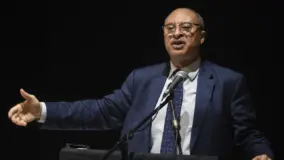
Babajide Fetuga, acting managing director of First Trustees Limited, has warned Nigerian Moslems against informal arrangements that expose families to avoidable risks, saying structured, Sharia-compliant plans provide clarity, transparency, and true generational protection.
Fetuga noted that regulated trustees play a crucial role in ensuring proper execution of wills and trusts, reinforcing public trust and accountability. He highlighted estate planning as a sacred duty, just as he advocated for Stronger Frameworks in Advancing Structured Islamic Inheritance Practices
“Estate planning is more than documentation—it is stewardship,” said Fetuga, who was represented by Rotimi Obende, head, private trust, First Trustees Limited, during the 8th Annual Islamic Estate Planning Clinic, held recently in Abuja.,
Themed, ‘From Informality to Legacy: Structuring Islamic Wealth Transfer,’ the clinic was organised in collaboration with The Metropolitan Law Firm and Al-Ameen Trustees, bringing together leading Islamic legal, financial, and policy experts.
The clinic underscored the urgent need for Nigerian families to transition from informal inheritance practices to professionally structured, Sharia-compliant estate planning frameworks as a tool to seamlessly transfer and protect wealth, prevent family conflicts, and ensure legacies endure for future generations
Isa Ali Pantami, former minister of Communications and Digital Economy, in a keynote address cautioned against relying on verbal inheritance promises, which frequently lead to conflict and asset loss.
He called for the integration of modern technology, including blockchain, to securely store and have seamless access to wills and estate documents. He also advocated for bridging traditional Islamic principles with cutting-edge innovation.
Ummahani Amin, managing partner, The Metropolitan Law Firm, stated that Islamic inheritance law offers both structure and flexibility. “Individuals can allocate up to one-third of their estate through properly documented wills and trusts. Too many families suffer because intentions were never formally recorded.”
According to the participants, informal inheritance practices are no longer sufficient with today’s increasingly complex and diverse assets, from digital holdings, cross-border investments and complex business interests.
Participants also agreed that structured Islamic estate planning delivers clear advantages, including legal certainty, tax efficiency, family unity, and long-term wealth preservation.

Join BusinessDay whatsapp Channel, to stay up to date
Open In Whatsapp