…INEC fixes dates for polls amid Electoral Act delay
By 8 a.m. on February 20, 2027, millions of Nigerians are expected to queue under the sun, ballot papers in hand, once again placing their faith in a system many believe is still struggling to protect their votes. Yet, nearly a year before the first ballot is cast, a battle in Abuja over how results should be transmitted is already casting a long shadow over the credibility of the exercise.
At the heart of the controversy is the amendment to the Electoral Act currently before the National Assembly. The dispute is not about who will win the election, but about how the votes will travel, from polling units to collation centres and ultimately into the national consciousness.
The transmission question
For many Nigerians, the debate boils down to one word: transparency.
Since the introduction of the Independent National Electoral Commission’s (INEC) Result Viewing Portal (IReV) during the 2023 general election, citizens have grown accustomed to the idea that results from polling units can be uploaded electronically, creating a digital trail that reduces room for manipulation.
But the Senate’s handling of the amendment has unsettled that expectation.
On Tuesday, the Senate rescinded its earlier decision that had rejected mandatory electronic transmission of election results from polling units to INEC’s portal after vote counting. Lawmakers subsequently re-amended the bill to accommodate electronic transmission.
However, the revised provision stops short of making it compulsory. Instead, it allows electronic transmission but provides that, in the event of internet failure, the manually completed Form EC8A will serve as the primary means of result collation.
To some, that caveat is reasonable. To others, it is a loophole wide enough to drive a political truck through.
Form EC8A remains the foundational document in Nigeria’s electoral process. Completed at the polling unit immediately after votes are counted, it is the first official record of the ballot outcome. In election petitions, courts frequently rely on EC8A forms because they represent the results at source.
Yet, critics argue that once results leave the polling unit physically, they become vulnerable to alteration during transit or collation.
Hiding under technology?
Opponents of mandatory electronic transmission say Nigeria’s technological infrastructure is not yet robust enough to sustain a fully digital process.
“People need to understand what real-time means. Real-time transmission can only happen if the INEC adopts an e-voting system. For now, INEC does not have the capability for e-voting. Maybe in two or three years, we can adopt e-voting. But as of today, INEC has not put an e-voting system in place,” said Adeniyi Adegbonmire, chairperson of the Senate Ad Hoc Committee reviewing the amendments.
The argument rests on connectivity gaps. Large swathes of rural Nigeria still experience poor or non-existent internet access. In such areas, insisting on real-time upload could delay collation or disenfranchise voters.
But legal practitioners and civil society actors counter that the issue is not whether Nigeria has achieved perfect digital coverage, but whether lawmakers are willing to close legal ambiguities that have historically undermined public trust.
Olisa Agbakoba, a senior advocate of Nigeria, warned in a recent op-ed: “The National Assembly must act decisively to embed mandatory real-time electronic transmission of results in the Electoral Act, removing all ambiguity and closing the legal loopholes that have been exploited to undermine the people’s will. Democracy demands nothing less.”
Victor Giwa, another legal practitioner, framed the debate differently during an appearance on Channels Television. “We are talking about the problem of not having a network, that is what the issue actually is. The National Assembly should be tasking our Ministries, Departments and Agencies (MDAs) on how they can pursue serious technological development, setting targets for these MDAs and INEC.”
For critics, invoking poor network penetration is less a technical argument and more a political shield.
A pattern of distrust
The tension did not emerge in a vacuum. The 2023 elections exposed significant trust deficits, particularly around the upload of presidential results to the IReV portal. Although INEC insisted that the glitches did not invalidate the outcome, public confidence suffered.
The new amendment debate reopens those wounds. When lawmakers initially moved to remove electronic transmission from the clause altogether, protests erupted from citizens and civil society groups who saw it as a regression.
The Senate has now constituted a nine-member harmonisation committee to reconcile differences between its version of the bill and that earlier passed by the House of Representatives. But the broader question remains unresolved: should electronic transmission be a legal obligation or merely an administrative option?
In a country where election petitions routinely end up in court, clarity in the law is not a luxury, it is a safeguard.
INEC moves ahead
Amid the legislative back-and-forth, INEC has pressed forward. The commission has officially scheduled the 2027 general elections, with Presidential and National Assembly polls set for February 20, 2027, and Governorship and State Assembly elections slated for March 6, 2027.
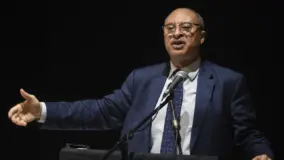
Joash Amupitan, INEC chairman, announced the timetable in Abuja on Friday, emphasising that preparations are underway despite delays in the passage of the amended Electoral Act.
“The commission has worked meticulously to set the election timetable and sequence of activities to ensure a smooth electoral process in 2027. We remain committed to conducting free, fair, and credible elections, even as we await the National Assembly’s approval of the amended Electoral Act,” he said.
The commission has submitted recommendations to lawmakers and signalled that certain activities may be adjusted depending on when the revised legislation is enacted.
In essence, INEC is preparing to conduct an election under rules that are still in flux.
More than a technical debate
The stakes are high. Elections are not merely administrative exercises; they are the foundation of democratic legitimacy. When citizens doubt the process, they doubt the outcome. And when they doubt the outcome, governance itself becomes fragile.
The debate over electronic transmission may appear technical, but its implications are deeply political. A mandatory system would reduce discretion and ambiguity. A permissive system leaves room for interpretation and contestation.
The National Assembly faces a defining choice. It can strengthen the legal architecture of Nigeria’s democracy by closing grey areas, or it can leave behind a framework that depends heavily on trust in a political environment where trust is already thin.
For voters who will stand in line two years from now, the question is simple: will their votes travel safely from the polling unit to the final declaration?
Until that question is resolved with clarity and conviction, the credibility of the 2027 election will remain, at best, uncertain and at worst, in jeopardy.

Join BusinessDay whatsapp Channel, to stay up to date
Open In Whatsapp