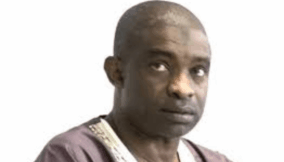
Nasir El-Rufai, former Kaduna State governor, said that he never had a personal relationship with President Bola Tinubu, dismissing claims that their current political differences amount to a fallout between former allies.
Speaking on Trust TV’s 30 Minutes on Monday, El-Rufai said public perception that he once enjoyed close ties with the president was misplaced.
“There is an assumption that I was ever Tinubu’s friend. I was not,” he said. “We never got along… We never had a personal relationship.”
The former governor clarified that his support for Tinubu during the 2023 presidential primaries and general election was driven by party principles rather than personal loyalty.
“For me, Tinubu was initially an aspirant of the party,” he explained. “It wasn’t about Tinubu. It was about principle.”
According to him, the decision to back a southern candidate after the eight-year tenure of former President Muhammadu Buhari was rooted in what he described as a prior understanding within the All Progressives Congress (APC).
“It was a matter of principle,” he said, adding that once Tinubu emerged as the party’s flagbearer, he felt duty-bound to work for his victory. “It is a principle of mine that I fight for the candidate of my party in every election to win, whether I like the candidate or not.”
Despite that support, El-Rufai said fundamental differences in philosophy made cooperation difficult once Tinubu assumed office.
He added that even if he had accepted a ministerial appointment in the current administration, he would likely have exited.
“Even if that had gone through, I would have left the government long ago, because the philosophy of this government is contrary to everything that I have been taught… to stand for public good,” he said.
Describing their political paths as fundamentally incompatible, El-Rufai concluded: “We are parallel lines that will never meet.”
Dismisses governors’ defections
El-Rufai also downplayed concerns that defections by opposition governors to the ruling party could weaken resistance ahead of 2027.
“As the governor of Kaduna State… Tinubu lost. He didn’t win Kaduna. We lost three Senate seats,” he said, citing his own experience to argue that incumbency does not guarantee electoral outcomes. “The governor has only one vote.”
He framed the coming election cycle as a contest between citizens and entrenched political interests. “It is the people versus the gang of thieves,” he said. “Nigeria will prevail.”
On electoral reforms
El-Rufai declared support for the real-time electronic transmission of election results, accusing elements within the National Assembly of attempting to frustrate reforms aimed at safeguarding electoral integrity ahead of the 2027 general elections.
The former minister of FCT said he would have joined opposition figures, including Peter Obi, in protesting at the National Assembly if he had been in the country.
“It is the only way we can stop the manipulation that goes on in the coalition centres,” he said. “Rigging doesn’t take place in the polling unit, it is in the coalition centres.”
El-Rufai argued that the provision for mandatory, real-time transmission of results from polling units, already passed by the House of Representatives, would significantly improve the credibility of elections if restored by the Senate.
“This is about giving Nigerians the opportunity to vote for whom they want, and that result should not be subject to any manipulation,” he stated.
Opposition strategy and 2027 outlook
Beyond electoral reforms, El-Rufai addressed concerns about the readiness of his party, the African Democratic Congress (ADC), which has emerged as a rallying platform for opposition figures amid internal crises in the PDP.
He acknowledged perceptions that the party lacks visibility compared to the early days of the APC coalition in 2014.
“Yes, there is that concern,” he admitted. “APC was firing on all cylinders the moment it was formed. But this party is not a coalition of several parties. It’s a coalition of individuals. So it is taking time to settle.”
However, he maintained that extensive grassroots mobilisation is ongoing. According to him, the ADC is organising quietly at ward and polling-unit levels while preparing its manifesto and primary process.
“We are mobilising very, very aggressively at the lowest levels,” he said. “We have tapped into the dissatisfaction and the anger.”
El-Rufai further promised internal democracy within the party, pledging that aspirants would be allowed to contest freely without zoning or forced consensus arrangements.
“Everyone will be given the opportunity to contest and whoever wins will be supported by all,” he said.
On his absence from public view
El-Rufai also explained his recent absence from public discourse, attributing it to an annual holiday and subsequent health challenges.
“I usually take at least six weeks holiday every year,” he said, noting that he had travelled abroad at the end of November but was hospitalised after contracting “a mix of bacterial, viral and malarial infections.”
“I’m fine now,” he added. “And very soon I’ll be on my way to Nigeria.”
Join BusinessDay whatsapp Channel, to stay up to date
Open In Whatsapp