A new report by Tracka, BudgIT’s civic accountability platform, has identified Imo, Lagos, Kwara, Abia and Ogun as the five states with the highest rate of fraudulently delivered projects under Nigeria’s 2024 Federal Government budget, raising fresh concerns about procurement integrity and weak oversight in capital spending.
According to the analysis, fraudulently delivered projects are those marked by “diversion of project funds, disbursements for projects completed in previous budget cycles without new implementation, and poorly executed or substandard delivery.”
Tracka found that Imo State recorded the highest rate at 17.43 percent, followed by Lagos (12.73 percent), Kwara (11.76 percent), Abia (10.67 percent), and Ogun (8.33 percent).
Collectively, the five states account for 57.1 percent of all fraudulently delivered projects tracked nationwide, representing N8.61 billion out of a total N15.07 billion disbursed for projects in this category during the 2024 budget cycle.
The findings are contained in Tracka’s 2024/2025 report, The People and Government Oversight: Connecting the Dots in Service Delivery, which assessed implementation outcomes of capital projects across 30 states, tracking 2,760 projects linked to the N10.8 trillion capital component of the N34 trillion national budget.
Tracka warned that publishing budget data alone has not translated into accountability on the ground, noting that there remains “a significant gap between Nigeria’s budget allocations and actual project delivery,” despite official claims of high implementation rates.
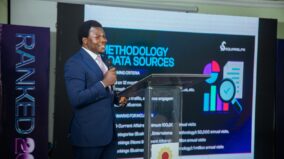
Speaking on the findings, Osiyemi Joshua, head of Tracka, said the prevalence of fraudulent delivery underscores systemic weaknesses in oversight and procurement enforcement. He noted that while funds are released and projects are reported as executed, citizens continue to encounter projects that exist only on paper, are recycled from previous budget cycles, or are delivered at standards far below what public money paid for.
State-level analysis shows varied patterns behind the fraud figures. In Imo State, Tracka tracked 109 projects valued at N5.70 billion, finding 19 projects fraudulently delivered, alongside mixed completion outcomes. Lagos, despite its unrivalled fiscal capacity and over N1.26 trillion in internally generated revenue in 2024, recorded 14 fraudulently delivered projects out of 110 tracked, highlighting “persistent governance risks despite exceptional fiscal strength,” the report noted.
In Kwara, 12 out of 102 tracked projects were classified as fraudulently delivered, raising what Tracka described as “significant concerns about procurement integrity and contractor accountability.” Abia State recorded eight fraudulent deliveries among 75 tracked projects, while Ogun rounded out the top five with an 8.33 percent fraud rate.
Tracka stressed that the problem is not confined to funding levels but to how projects are executed and verified. “The problem is not always a lack of resources; more often, it is a lack of accountability,” Joshua said, adding that effective oversight must track spending “from parliamentary approval to real outcomes in communities”.
The report argues that weak legislative scrutiny, limited real-time audits, and constrained access to treasury disclosures have made it easier for irregularities to persist. Since January 2025, Tracka noted, access to key data such as releases from the Office of the Accountant-General has been curtailed, complicating independent verification efforts.
To counter these gaps, Tracka said it wrote 1,250 letters to ministries, departments and agencies, engaged anti-corruption agencies including the EFCC and ICPC, and held 518 town hall meetings across 424 local government areas, mobilising citizens to validate projects in their communities.
Joshua emphasised that citizen oversight remains critical to reversing the trend. “Public money does not belong to the government; it belongs to the people. Connecting the dots in service delivery is what turns citizens from passive taxpayers into active shareholders in their own development,” he said.
Tracka urged stronger sanctions for contractors involved in fraudulent delivery, tighter procurement controls, and more transparent, real-time disclosure of budget releases, warning that without these reforms, inflated completion claims will continue to mask deep failures in service delivery across the country.
“Fund disbursements should be strictly tied to verified project milestones, with independent third-party validation required before release. Pre-qualification and blacklisting mechanisms must be strengthened, and the Bureau of Public Procurement (BPP) should rigorously assess contractors’ financial capacity, technical expertise, and past performance before awarding contracts,” the report recommended.

Join BusinessDay whatsapp Channel, to stay up to date
Open In Whatsapp