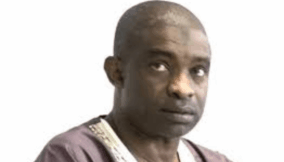
The High Court of the Federal Capital Territory (FCT), sitting at Apo, on Wednesday, January 21, 2026, struck out six motions filed by Abuja-based lawyer, Victor Giwa, in his ongoing trial over alleged forgery and impersonation.
The trial judge, ruling im motions marked M/7057/25, M/12210/25, M/14379/25, M/15452/25,M/16530/25 and M/16695/25, Justice Jude Onwuegbuzie, struck out the motions, including an application seeking his recusal, on the ground that that the 1st defandant had filed several petitions to the Chief Judge of the Federal Capital Territory and wanted the petitions to be determined first before his motions can be taken and urged the court to adjourn sinedie.
Giwa and a co-defendant, Bukola, are standing trial on allegations of forging official documents and impersonating a Senior Advocate of Nigeria (SAN), Awa Kalu, allegedly to mislead the Office of the Attorney-General of the Federation (AGF) into withdrawing a criminal charge earlier filed against Giwa at the FCT High Court, Maitama.
At the resumed proceedings, prosecuting counsel, T. Y. Silas, appeared for the Inspector-General of Police. The second defendant was represented by Ogbu Aboje, while Levi E. Nwonye appeared by watching brief for the norminal complainant.
Counsel to the first defendant Ibrahim Idris SAN was absent, prompting Giwa to appear and conduct his defence in person.
Silas informed the court that the matter was previously adjourned to allow the first defendant engage counsel so that all pending motions filed by both the prosecution and the defence could be taken. He told the court that the prosecution was ready to move the pending applications.
However, Giwa objected to the hearing of any motion, stating that he had written three petitions to the Chief Judge of the FCT, alleging that he could not obtain justice before the court due to what he described as the trial judge’s biased attitude.
He urged Justice Onwuegbuzie to recuse himself from the case, relying on Section 36(1) of the 1999 Constitution on the right to fair hearing and impartiality, as well as provisions of the Administration of Criminal Justice Act (ACJA). He argued that justice must not only be done but must be seen to be done.
He further claimed that a letter he addressed to the court on January 19, 2026, was rejected by the court registrar and insisted that, having written to the Chief Judge of the FCT on January 14, 2026, he would not submit to further proceedings.
In response, the prosecuting counsel opposed the objection on four grounds, relying on Sections 98(2) and 306(c) of the ACJA, 2015.
Silas argued that the prosecution had already opened its case on October 30, 2025, with the calling of its first witness, PW1, and that petitions to the Chief Judge will not automatically stay criminal proceedings.
He described Giwa’s applications as a calculated attempt to delay the trial and cited judicial authorities, including Okeke v. State and Tiput v. Dawamkat, to urge the court to refuse the applications, stressing that litigation must come to an end.
Counsel to the second defendant aligned with Giwa’s submissions and urged the court to uphold the application seeking recusal.
In his reply, Giwa faulted the prosecution’s reliance on Section 98(2) of the ACJA, arguing that calling only one witness did not amount to properly opening the prosecution’s case. He urged the court to suspend proceedings pending investigations into his petitions by the Chief Judge and the National Judicial Council (NJC).
In a bench ruling, Justice Onwuegbuzie in concurring with the arguments of the learned prosecuting counsel held that petitions to the NJC or the Chief Judge do not, by themselves, operate as a stay of criminal proceedings. The court observed that the conduct of the first defendant showed a consistent pattern aimed at obscuring and frustrating the trial. The judge noted that Giwa’s refusal to move his own motions amounted to disobedience of court orders.
Consequently, the court struck out all six motions filed by the first defendant and adjourned the matter to January 26, 2026.
The court further noted that the case was initially adjourned to January 28, 2026, but the date was brought forward after the first defendant informed the court that he would be appearing before the Legal Practitioners Disciplinary Committee (LPDC) on that day.
Join BusinessDay whatsapp Channel, to stay up to date
Open In Whatsapp