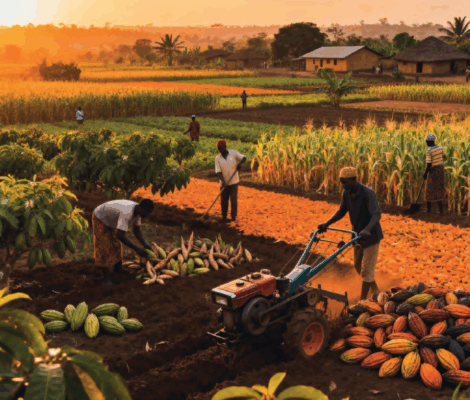
Every nation carries within its history the story of how it first learned to sustain itself, how people tilled the land, exchanged goods, built communities, and gradually shaped an economy. In Nigeria, that story once revolved around the quiet rhythm of agriculture. Long before modern industry and crude oil reshaped national priorities, the country’s fortunes were tied to its soil. Cocoa from the southwest financed iconic infrastructure; groundnut from the north funded education; palm oil from the southeast powered e