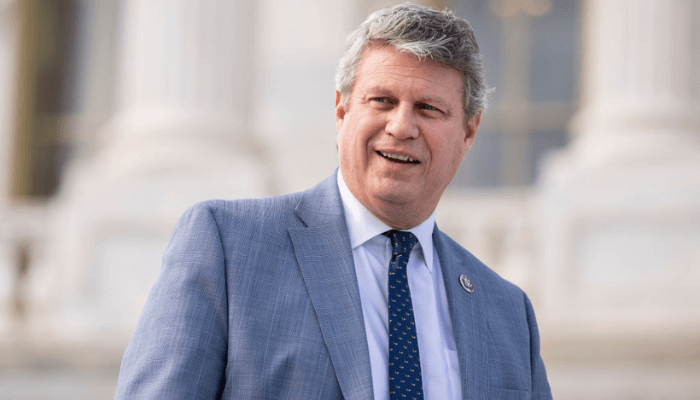
US Congressman Bill Huizenga said that persistent insecurity and the Nigerian government’s “failure to confront violent actors” pose a greater threat to US corporate investment in Nigeria than any sanctions emerging from Washington’s renewed focus on religious persecution in the country.
Nigeria is currently the United States’ second-largest trading partner in Africa, with bilateral trade in goods and services reaching nearly $13 billion in 2024. The US also remains one of Nigeria’s top foreign investors, recording $6.5 billion in foreign direct investment in 2023 – an increase of 5.5 percent compared to 2022, Richard Mills, the country’s ambassador to Nigeria, disclosed at an event in June.
In an exclusive interview with BusinessDay, Huizenga said American energy, technology and manufacturing firms operating in Nigeria already face significant security and regulatory risks, and these are more likely to shape investment decisions than diplomatic pressure.
“The real deterrence of US investment is unmitigated violence and a government willingly turning a blind eye to violence on its doorstep,” he said.
His comments come as President Donald Trump redesignated Nigeria as Country of Particular Concern (CPC) and threatened military action in Africa’s most populous nation over alleged Christian genocide.
Nigeria was first designated a CPC in 2020 during Trump’s first term, a label reserved for the world’s worst violators of religious freedom. However, former President Joe Biden lifted the designation months later, a move that drew criticism from conservative lawmakers and some religious freedom advocates.
The US Commission on International Religious Freedom (USCIRF) had continued to recommend Nigeria’s listing.
Read also: FG, UN sign pact to strengthen democracy across West Africa
Huizenga defended the redesignation, insisting that the Nigerian government has failed to protect Christian communities and moderate Muslims from repeated attacks. He said violence in the Middle Belt and parts of northern Nigeria continues to intensify, despite Abuja’s assurances.
“Since the removal of the designation, we have seen targeted actions against both Christians and moderate Muslims,” he said, pointing to “the coordinated killing of Christians on Christmas Eve in 2023” as one of several major incidents.
Although analysts point to land-use conflicts, climate pressures, and weak local governance as underlying factors in the violence, Huizenga argued that religious extremism remains a central driver. “To dismiss that religious extremism does not play a significant factor in the killings and violence ignores reality,” he said.
The congressman is backing sanctions against groups such as the Miyetti Allah Cattle Breeders Association and Fulani-ethnic militias, which he said “have pushed rhetoric that has contributed to the persecution and been directly linked to the conflicts.” He added that visa bans and asset freezes “are meaningful tools to apply pressure on the Government of Nigeria to address these issues.”
Huizenga revealed that he had confronted Nigeria’s Foreign Minister Yusuf Tuggar last year and left the meeting “frustrated and disappointed,” describing the government’s approach as one that “downplays the problem” rather than recognizes its scale. “Continuing to ignore or even downplaying the repeated massacring of a particular group… only perpetuates the cycle of violence,” he said.
Despite his sharp criticism of Abuja, Huizenga maintained that sanctions would not create a hostile environment for American businesses. Instead, he said they could drive overdue reforms.
“Sanctions are a tool to pressure the Nigerian Government to address the perpetual killing of Christians and Muslims alike,” he said. “The violence is the real threat to investment.”
The Nigerian government has repeatedly rejected claims of religious persecution, arguing that the conflict is driven by criminality, resource struggles, and opportunistic armed groups. But the US resolution, now gaining momentum in Washington, places new diplomatic pressure on President Bola Tinubu’s administration to show measurable progress in curbing attacks and protecting vulnerable communities.
Analysts further caution that growing US criticism may jeopardise the Tinubu administration’s broad economic reforms, initiated in 2023 and now beginning to yield visible gains.
Join BusinessDay whatsapp Channel, to stay up to date
Open In Whatsapp