A research team at the University of Ibadan (UI), has championed the development of a groundbreaking instructional model designed to enhance the quality of primary education in the country.
The initiative, known as the Fun-Rigor Multimodal Instructional Method (F-RMIM), was developed under the F-RMEP Research Team at the Faculty of Education, University of Ibadan.
Under the leadership of Ishola Akindele Salami, the F-RMEP project has been at the forefront of redefining early childhood and primary education through an innovative approach that blends fun and academic rigor to promote holistic learning.
The innovation draws from the Fun-Rigor Theory of Child Development (F-R Theory) — a Nigerian-proposed educational theory that emphasizes both play and structured intellectual engagement. One of the success stories of F-RMEP is the development of F-RMIM
According to Salami, “the F-RMIM phase of the F-RMEP project was made possible, after F-RMEP draws national attention and secures support from the Tertiary Education Trust Fund (TETFund) — Nigeria’s foremost government agency for research, innovation, and institutional capacity building in tertiary institutions in 2021.”
TETFund provides funding support to public universities, polytechnics, and colleges of education across Nigeria for research, training, and infrastructure development. Through its National Research Fund (NRF) intervention, TETFund supports outstanding research projects capable of addressing national challenges and advancing knowledge.
“This vital support has enabled the F-RMEP project to move from theoretical conception to practical implementation, known as F-RMIM, at the University of Ibadan, empowering teachers with tools to improve classroom engagement and learning outcomes,” Salami added.
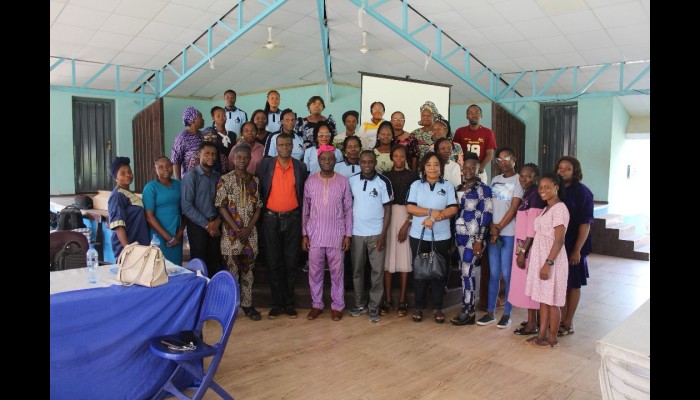
The F-RMIM officially commenced in November 2025, focusing on equipping lower primary school teachers in Ibadan with practical skills to improve classroom engagement and learning outcomes.
“Our goal is to enhance the quality of teaching and learning by creating a balanced system where children learn joyfully while developing critical thinking and life-manipulative skills,” Dr. Salami said.
Recognizing the intellectual leadership that pioneered the innovation ,Salami expressed gratitude to the project’s research team — including IyanuOluwa Olalowo, Shade Owolabi, Temitope Egbedeyi, Babalola Emmanuel, and Sulaimon Kafayat — for their foundational contributions to the project’s vision.
He said their collective effort helped establish the foundation that allowed the project to grow into a nationally recognized model, commending the current members of the research team at the University of Ibadan for their continued dedication and commitment to advancing the project’s success.
According to the team, the F-RMIM instructional method encourages teachers to integrate ‘play activities with developmentally appropriate educational rigour’, using a specialised lesson plan format that promotes individualised attention and sustained child engagement.
Since F-RMEP conception in 2021, it has been used to train orphan, and vulnerable children across SouthWest, Nigeria and early years educators who have adopted the programmatic framework of the project have consistently highlighted its innovative and effective outcomes in children’s learning — including marked improvements in pupils’ interest, participation, and comprehension.
“With its unique fusion of play, rigor, and ‘multimodal pedagogy’, the F-RMIM model represents a promising step toward improving learning quality which, in addition to learning domains, ensure the acquisition of life-manipulative skills, most importantly, the economic and soft skills by the primary school pupils in Nigeria,” the team added

Join BusinessDay whatsapp Channel, to stay up to date
Open In Whatsapp